The Best Marrakech Desert Tour 8 Days - Desert Magic Morocco
Magic moroco agency desert tour–overview:
This unforgettable 8 day Marrakech desert tour to the south of Morocco is the most comprehensive desert trip of all. There is time fully to enjoy the red sand dunes of Erg Chebbi in Merzouga and the remote dunes of Erg Chegaga.
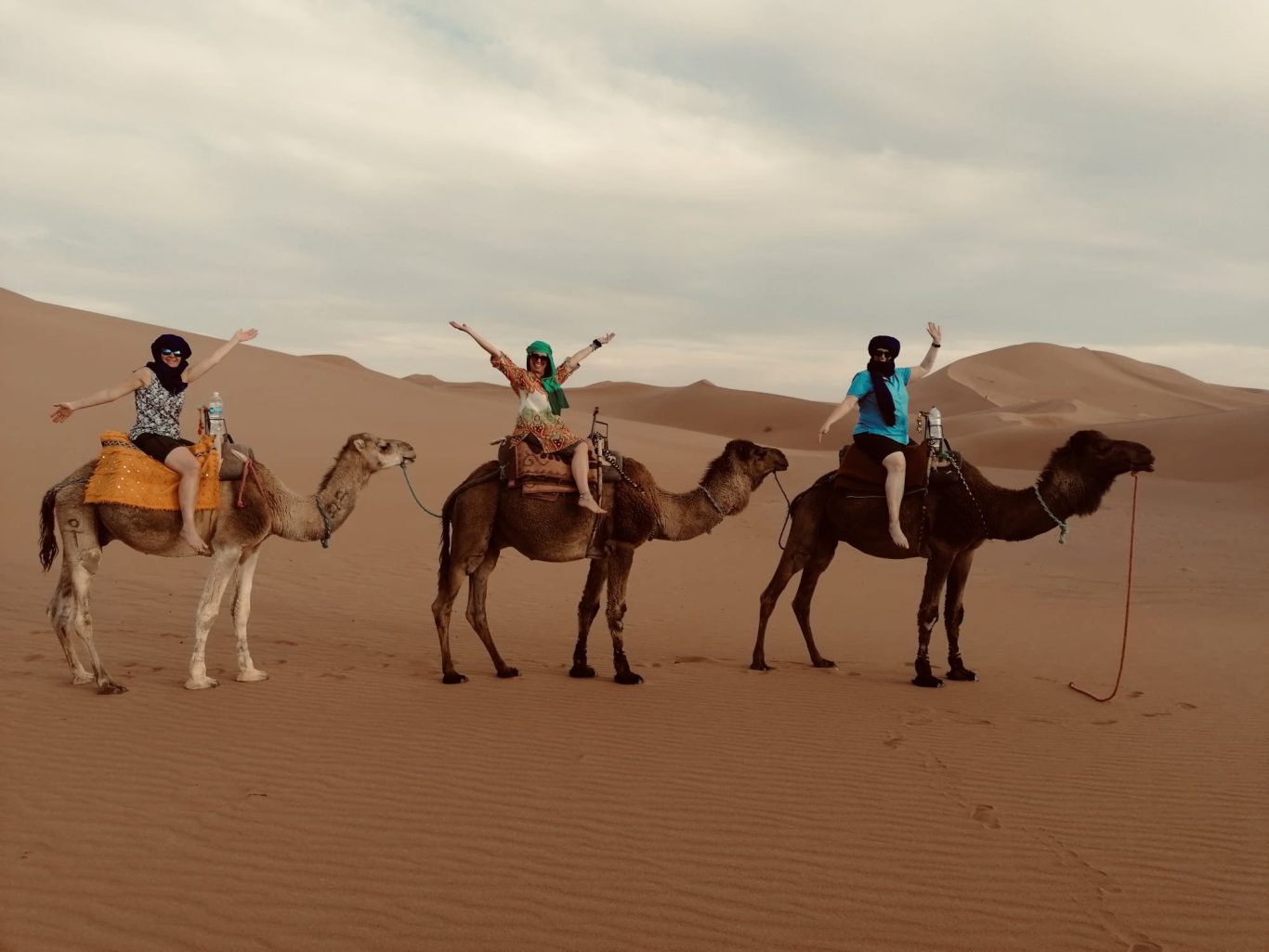
Sunset camel rides to witness the spectacle of the sunset, dinner under the stars in this magical atmosphere, evenings of music and exotic luxury tents are incomparable and forever etched in your memories.
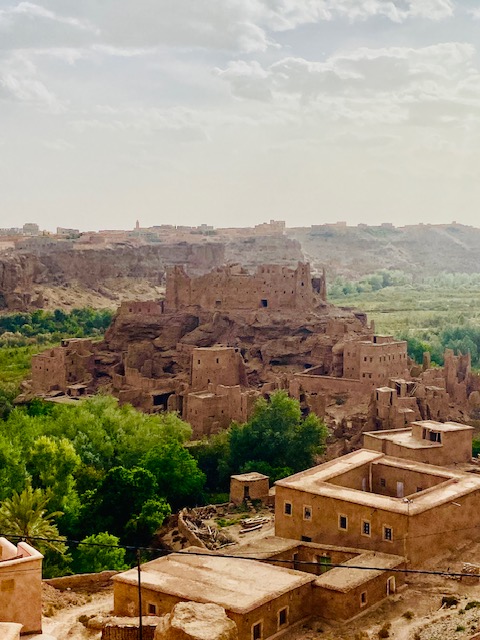
Scheduled visits to Kasbah Telouet and the UNESCO World Heritage Site, Kasbah Aït Ben Haddou, Ksabh Amredhil on the edge of the Skoura Oasis are insights into Berber architecture designed to suit the climate.
Local cosmetic products from Damascene roses, the Dades Valley, the Toudgha Gorges, Erfoud’s prehistoric, underwater fossils along the Valleys of a Thousand Kasbahs and the Ziz River vary enormously from each other and are spectacular in themselves.
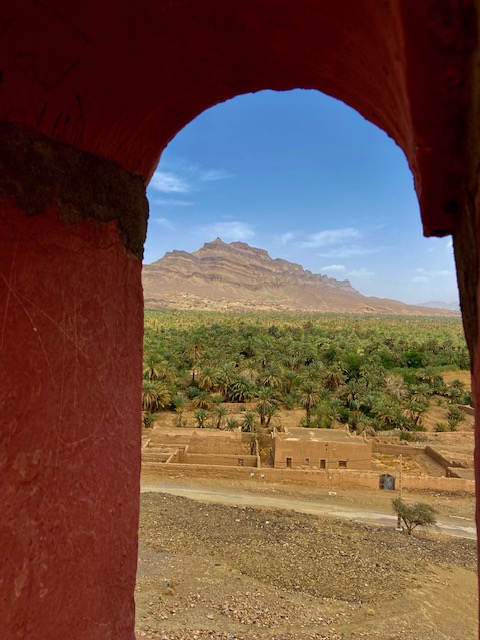
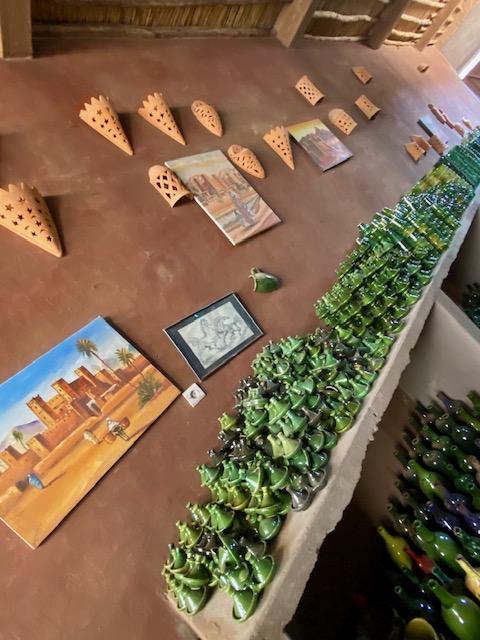
Date palm trees, the famous green glaze pottery, the ancient Qoranic library are unique to the Dra’a Valley. Searching for fossils in Iriqui Lake and discovering the art of Berber carpet-making on display in Taznakht are more highlights of the desert tour. Taroudant’s intact ramparts, the small saffron museum in Taliouine, TInmal Mosque and Andre Heller’s Anima Garden full of colourful sculptures and plants from all over the world add more icing to this cake of magic and majesty.
highlights:
Stopping off at the famous Kasbahs Telouet, Kasbah Aït Ben Haddou, and Kasbah Amredhil in Skoura
Enjoying the products of cosmetic co-operatives in Kelaa M’gouna in the Rose Valley Seeing the night in luxury desert tents in Erg Chebbi in Merzouga and in Erg Chegaga
Taking a camels ride, and watching the slow and spectacular sunsets and sunrises Joining in evenings of nomad and Berber music round a camp fire after dinner
Searching for millions of years old fossils at the edge of the dried-up Lake Iriqi Lake
Visiting rug-making in Taznakht, the saffron museum in Taliouine, Taroudant’s fascinating ramparts
Wandering round and marvelling at the beautifully sculpted Andre Heller Anima Garden.
Program details
Day1
Marrakech – Ouarzazate
Morning departure from your hotel/riad in Marrakech at 8.30 to drive acrossthe High Atlas Mountains. There are numerous opportunities to stop for photos and the drivers know the most popular. The first scheduled Kasbah visit is Telouet. This was the palace and headquarters of the powerful Glaoui tribe, who held sway over much of the area to the direct south. Two of the three main buildings of the Kasbah lie exposed to the wind and the rain as the Pasha’s property was confiscated as punishment for treason.
Unfortunately, the whole Kasbah is now closed due to the damage caused by the earthquake that struck Morocco in September 2023. Nevertheless, it is stillworth visiting the exterior with a local guideto discover its rich history.
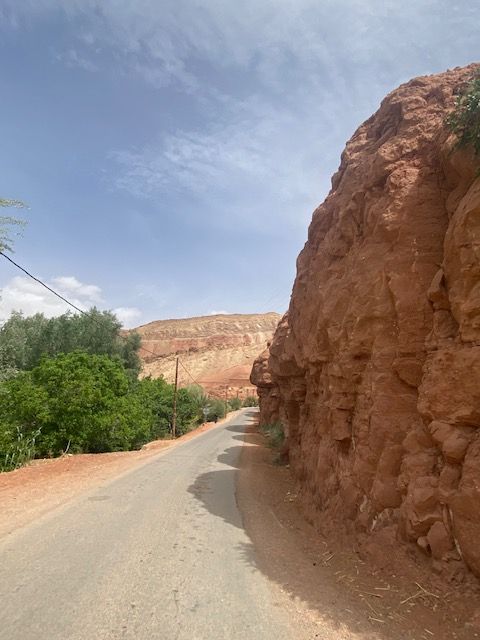
The Ounila Valleywith its fertile fields and gardens follows the river far below the road. The varying hues of rock and soil, Berber villages and gardens, as well as smaller Kasbahs are all quite breath-taking. Olive, almond, and fruit trees are the main crops and vital to the economy for most families.
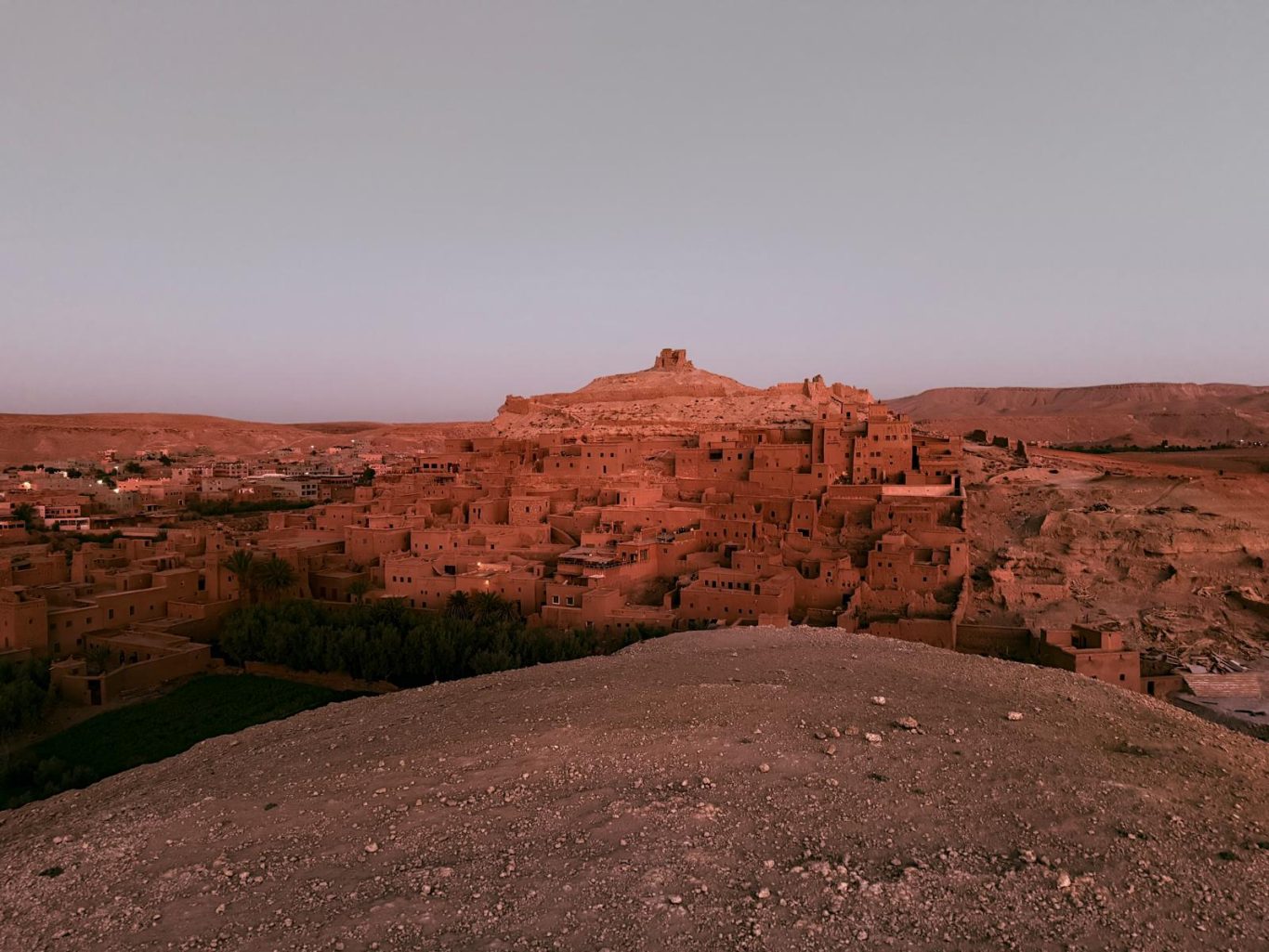
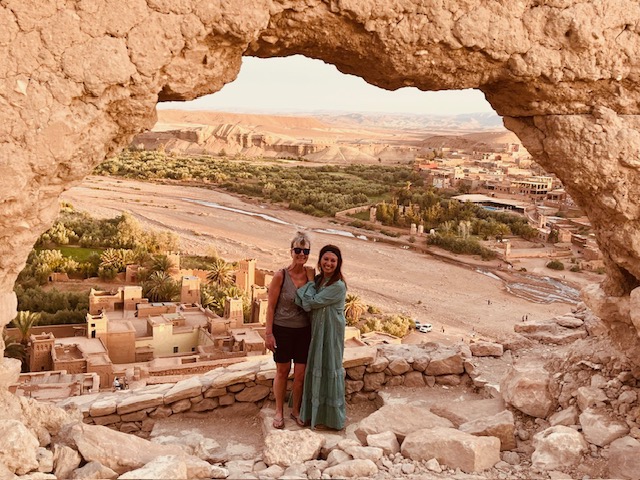
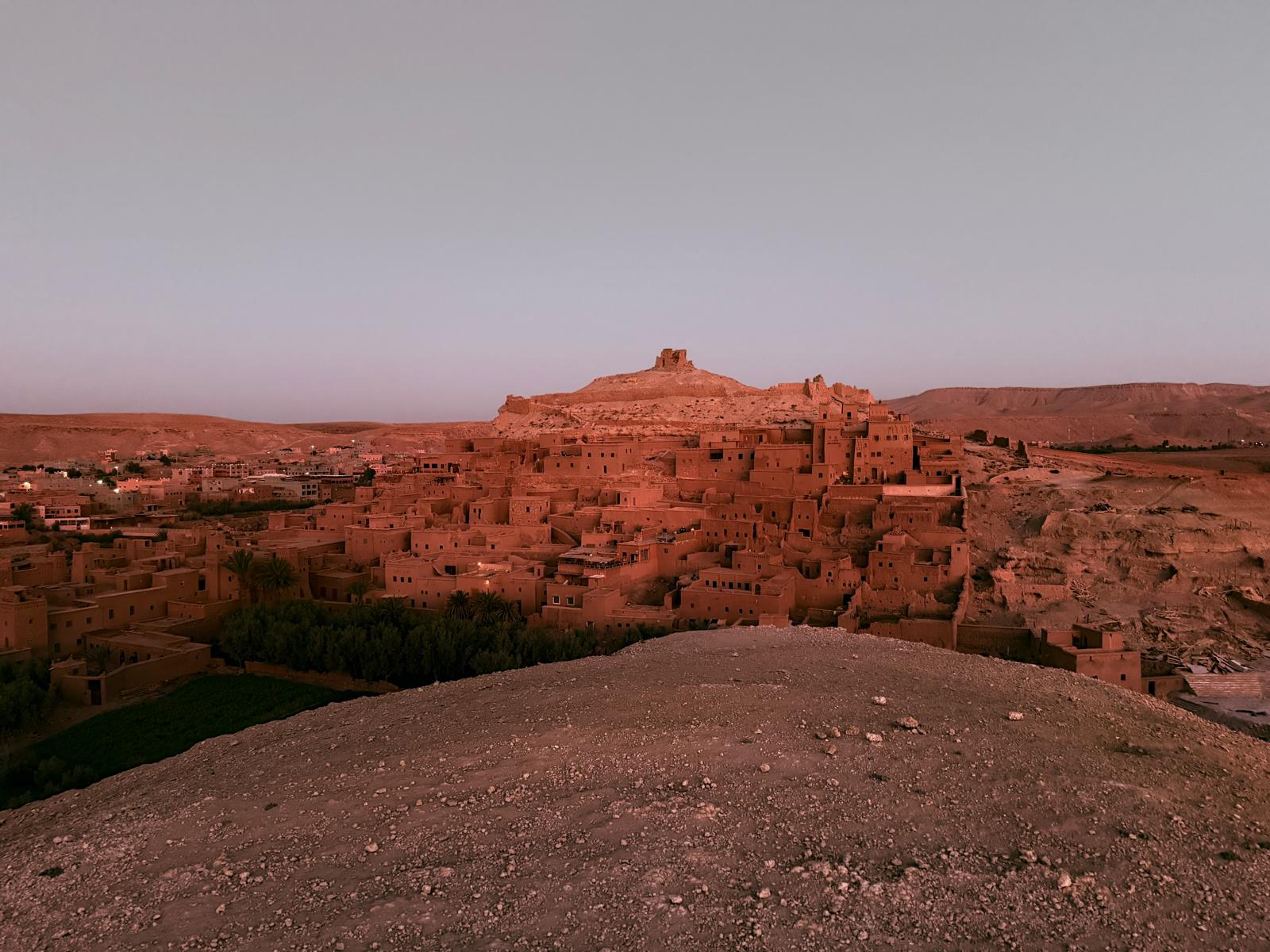
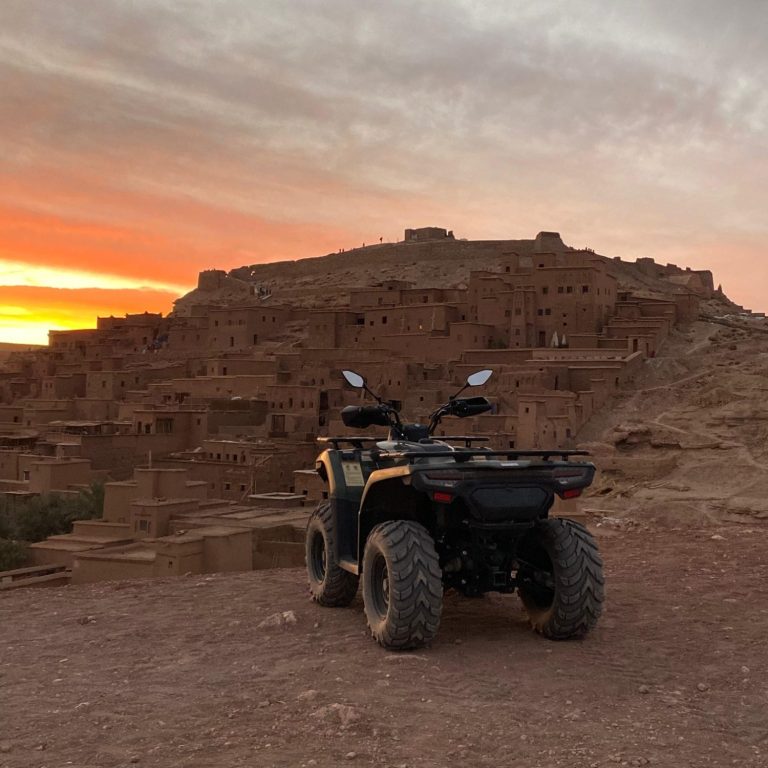
Towards the end of the valley lies Kasbah Aït ben Haddou, the oldest and most famous Kasbah of all, and one of Morocco’s nine UNESCO World Heritage sites. The architectural style is well preserved and the earthen constructions are perfectly adapted to the climatic conditions, in complete harmony with the natural environment. Probably dating back to the 17th century, it has become increasingly well-known as the backdrop to many Hollywood blockbuster films.
Day2
Ouarzazate – Dades Gorges
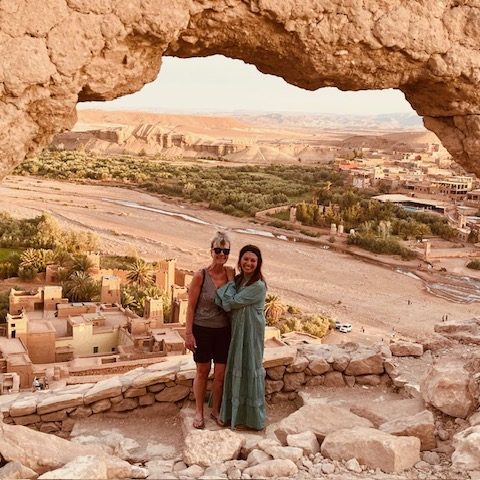
After breakfast, the road turns east passing theSkoura Oasis, where numerous ancient kasbahs stand abandoned among the palm trees.Kasbah Amredhil has been beautifully restored giving a clear idea of multi-generational life. It is made entirely ofadobe, with very thick walls keeping out the summer’s heat and retaining warmth in winter.
The drive continues to Kela’a M’gouna,theValley of Roses, famous for itsRose FestivalinMay. The locally produced cosmetic articles are well-known throughout Morocco and the rose scent lingers deliciously.
You will take an off-road piste to have a better impression of the landscape. On the way Berber nomads will welcome you at their caves to offer you a glass of tea. Their visitors astound at just how hard life is in these arid surroundings bringing up children and tending their goats.
It is just a short way on to the Dades Valley for lunch. This leaves you half a day to walk in the valley, or to spend it relaxing or strolling by the fields and gardens. If you wish, you have time to walk into the mountains to spend the night with a Berber family, or you can remain in the valley for the night in a guest house.
Day3
Dades Gorges– Merzouga
The following morning the trip continues a short distance toTinghirand the higher Toudgha gorges. As you walk through (being careful to avoid the tourist buses) you can appreciate the steep high sides and have to crane your neck to see the narrow expanse of sky above.
East of here, lie Tinjdad andthe Oasis of TafilaletnearErfoud, famous for its date festival. BetweenTinjdadandErfoud, you can walk down into the extraordinary underground water channels deep below the surface, which prevented evaporation in the desert heat. InErfouditself, you can stop to see the cutting and polishing of thousands of fossils, formed into many different artefacts.
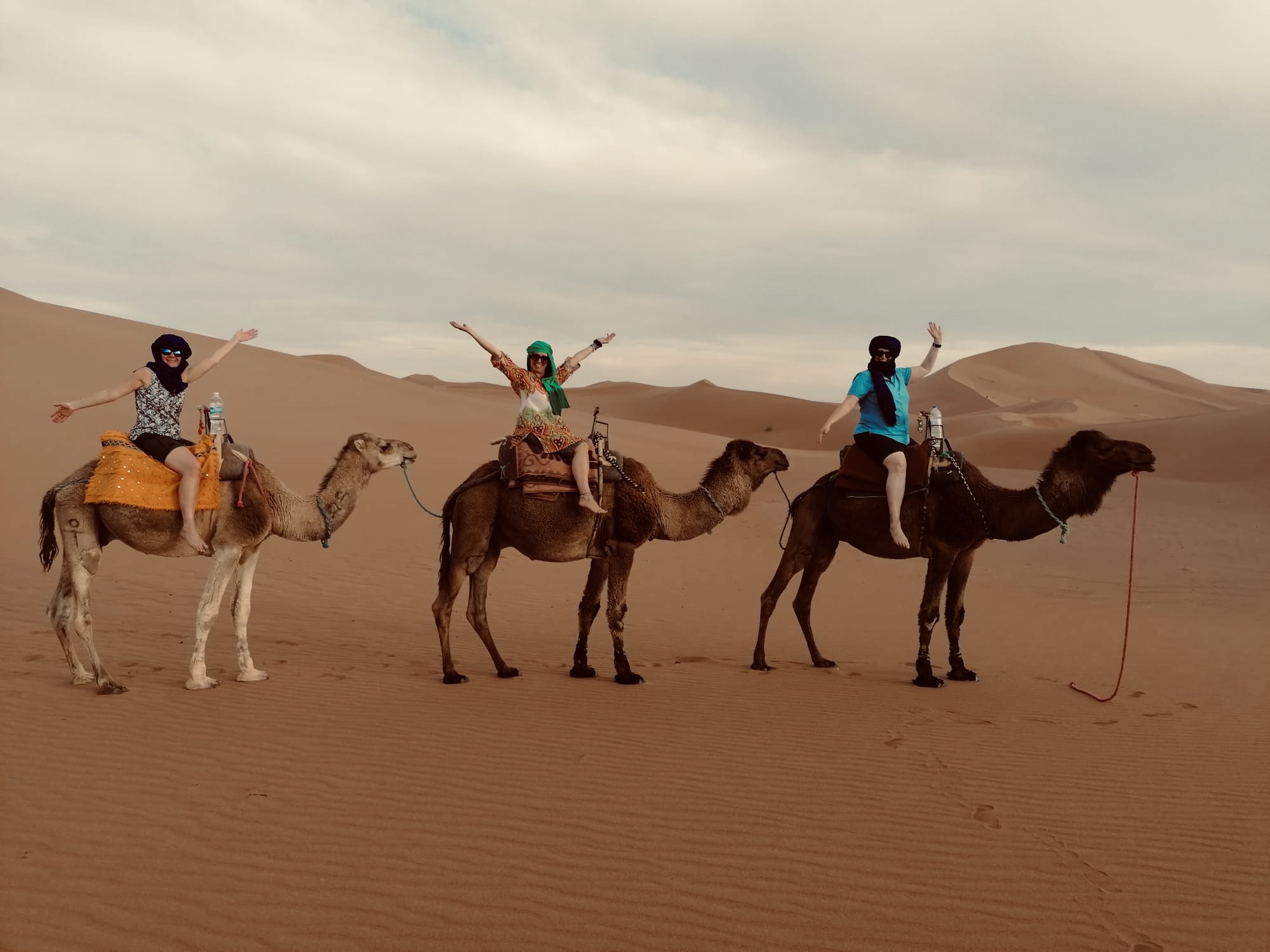
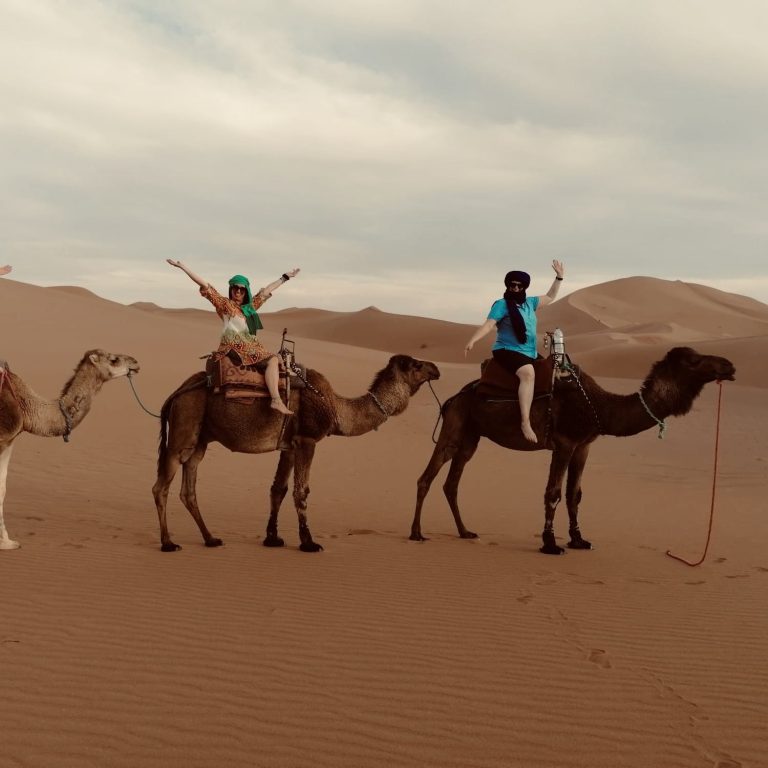
When you reach the edge of the dunes you will take the camels to ride to your luxury tent. If you prefer the 4×4 can take you there instead.
Your luxury tent is equipped with a private bathroom, king-sized beds, beautiful Moroccan furnishings and lamps tastefully arranged to enhance your enjoyment of the silence and beauty of the dunes.
Day4
Merzouga – Agdez
The morning sunrise is spectacular and well worth getting up early to watch. The drive to theDra’a Valley to the west passes throughTazzarine(featured in the film ‘Babel’) andN’Qobfor lunch. If you are lucky, you may see scimitar-horned oryx in an enormous fenced reserve.
In the afternoon, the road arrive at Tansikht in theDra’a River.We turn north to Agdez at the head of the valley where we spend the night in a guest house.
Day5
Agdez – Chegaga Dunes
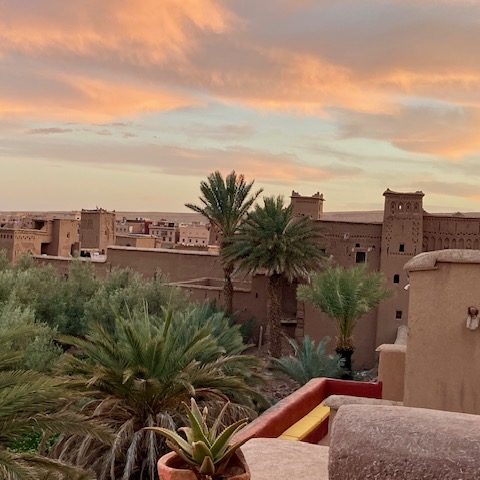
Near the town liesKasbah Tamnougalte, the oldest inthe Dra’a Valley. Some of the houses are still inhabited but others crumbling away. For a short while, we go off-road along some of the ancient caravan routes passing villages and gardens so that you can gain a better idea of the way of life along the oases.
After Tansikht, we reach Tinsouline; a kilometre or so away are the fascinating rock carvings of animals long extinct in Morocco. This is Foum Chenna,some 4000 years old. Beyond Zagora,the largest town in the whole area, we stop in Tamgroute, to visit thepotteriesfamous for the green glaze. The ancientQuranic librarywith exquisite hand-written Arabic texts is very famous in Morocco and the books a wonder to behold.
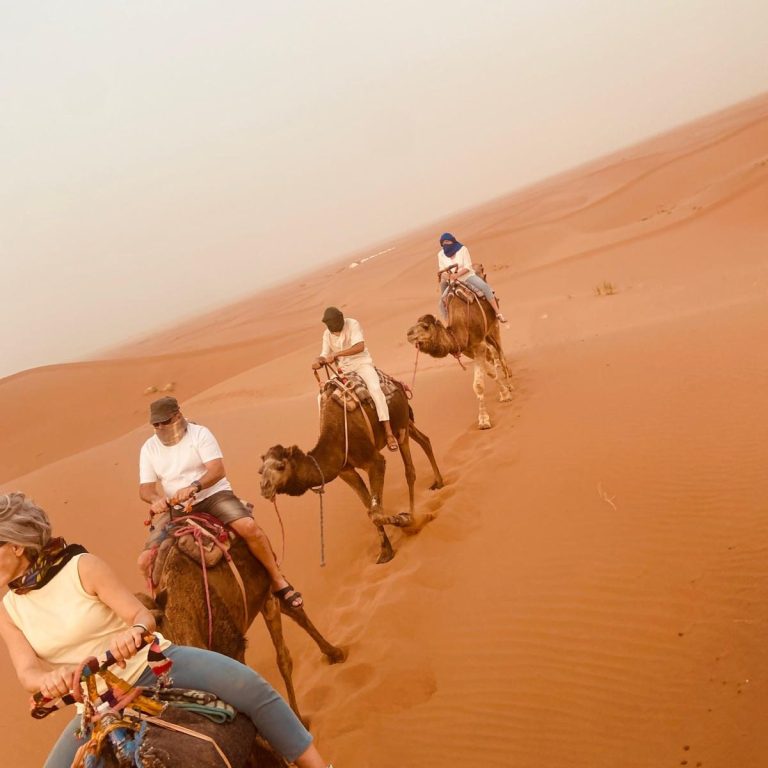
Further south lies M’hamid, the gate to the desert , where the paved road stops and theSaharastarts. 60 km away across the desert are the remoteErg Chegaga dunes(300m). These dunes are far away from civilisation, right out in the full desert and where the silence is overwhelming.
You have dinner and spend the night at a luxury camp with private bathroom, kingsized beds, beautiful Moroccan furnishings.
Day6
Chegaga Dunes – Taroudant
Another 90 km east crosses shall dunes and the stony desert, (“erg” and “hammada”) and later across the now dried-upLake Iriqui. Here you may well experience a mirage and unless it has been raining hard (which is rare and would mean the lake is impassable) we can assure you this “water” really is a figment of the imagination.
Here you can search for fossils; some lying loosely around but most fixed firmly into the rock.
From Foum Zguidat the edge of the desert,we drive north toTaznakht, famous for its Berber gelims and carpets. Travelling east again we cross theTizi-n-Ikhsane and Tizin-Tighatine passesto reachTaliouine, the centre of the saffron growing region. The little government-runmuseumhas interesting explanations of saffron agriculture,and as you enter thescent of saffronis dominant. The road takes us onto toTaroudant for the night in a riad.
Day7
Taroudant – Imlil
In the morning, you visit Taroudant, also known as“the little Marrakech”, due to its massive and unusually intact ramparts. Travelling back east a short way, we turn north overthe High Atlas Mountainsover the famousTizi-n-Test pass.At the top, the beautiful, elegant, brickTinmalmosque, once stood, but was sadly almost completely demolished during the severe September 2023 earthquake.
Lunch will be at a mountain restaurant with superb views. From here we continue through the mountains to the village ofImlil, where we stay the night. The extreme quiet of the village and the beauty of the views are quite overwhelming.
Day8
Imlil – Marrakech
After breakfast, there is plenty of time to walk and look up atToubkal Mountain, the highest peak in North Africa. Travelling along a very narrow, very picturesque road in the Toubkal National Parkwe reachAsni, a small Berber village, famous for its permanent as well as for its weekly souks. We then pass the mausoleum ofMoulay Brahim, a well-knownMoroccan Sufi saintwho died in 1661.
The road leads to the small village of Tahanout with an opportunity to stop on the way to wander through the astonishing Andre Heller Anima Garden, full of colourful sculptures and plants from across the world.
- Your driver escorts you to your hotel bringing your Marrakech desert tour of 8 days to an end!
What is included in this Marrakech desert tour – 8 days:
- Transport in a private air-conditioned vehicle; 4×4 Toyota Prado TX and fuel
- Pick-up from and drop-off at your riad or hotel in Marrakech
- Experienced local
- English/French/Spanish/Italian-speaking Berber and nomad driver/guide
- Accommodation in air-conditioned rooms/suites with private bathroom
- Overnight in a luxury desert camp in Erg Chebbi, Merzouga and Erg Chegaga
- All meals: breakfast, lunch, dinner – with vegetarian and vegan options available
- A camel ride with a guide. And if you wish to do some sandboarding, just speak to the camp staff!
- Luggage service to the camp and all accommodation
- Berber drumming and music
- Free time to explore the sites such as Aït Ben Haddou, for walks, photos, and tea/coffee breaks
- The opportunity to ask the driver to stop when and where you wish
- Entrance fees and local guide
- Tea, coffee and mineral water in the desert
What is not included:
- Drinks
- Tips
- Extras
Good to know about this 8 day Marrakech desert tour:
This 8-day desert tour from Marrakech can be customised to be more personal and special
Activities such as a full day trekking in the Erg Chebbi or Erg Chegaga dunes can be added to this tour
You can always consult your driver about skipping some spots to spend more time elsewhere
Here is adownloadable packing listto help plan for your Moroccan desert tour
- We require a 30% deposit of the total price to book the car, while the balance is payable to us.
- We accept payment through PayPal, bank transfers in Europe, by credit card, or cash (USD, Euro, GBP or MAD)
- We offer a 25% discount for children under 12, and one child under 3 per family travels free of charge
These prices are liable to fluctuation according to the current exchange rate
- Our prices can be subject to an increase over the busy season, and, in particular, the Christmas and New Year’s Eve period
This tour is designed to take you to both the Merzouga and Erg Chegaga deserts. However, the Erg Chegaga dunes can experience extremely high temperatures between June and September, and so most of the camps here close down during this period. In such cases, we might well need to adjust the itinerary by extending your stay in Merzouga, allowing you to experience the Sahara more deeply. We could also include alternative activities or destinations that provide unique cultural and natural experiences
Essential Tips to Plan Your Holiday in Morocco - Magic Morocco Agency
-If your holiday with Magic Morocco involves trips out to the vast expanse of the Sahara Desert, where you may be staying for several days, up to a week, or longer, you will need to be prepared. Here are some useful items that we recommend you pack before you leave on your trip of a lifetime to Morocco.
- A sleeping bag: While we provide plenty of blankets and sheets for your tented desert accommodation, it does get very cold in the Sahara on a winter’s night. Bring along your own sleeping bag, so that you’ll be snug as a bug under the spectacular, if chilly, Moroccan night skies, studded with a galaxy of shimmering stars. This is only really required on trekking over several nights or on the Sufi Retreat.
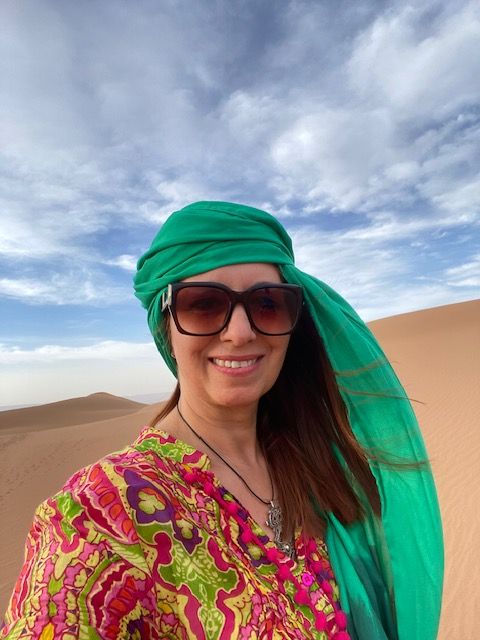
- A turban or scarf: This is an essential item when heading out on Morocco desert tours, as the simple garment will protect your face and hair from the harsh sun, as well as any sand that gets whipped up by the wind. If you’ve arrived for your holiday in Morocco and find you don’t have a turban — known locally as a “shesh” — or scarf, don’t worry. You can easily buy a “shesh” at a local shop or bazaar.
- Warm clothing: You’ll need to bring some warm clothes when you embark on a Morocco desert tour. Although temperatures are high in the Sahara during the day, they plummet at night, due to a lack of cloud to keep the heat in. While you might think you don’t need to pack heavy clothing for a trip to hot Morocco, you will need it when you’re out in the desert in the evenings in early spring, late autumn, and the winter.
- High-factor sunscreen to combat the strong sun.
- Good quality sunglasses that can filter out the sun’s harmful rays and protect your eyes.
- Solid footwear, such as good trainers, for all the walking you will be doing. Trainers are ideal footwear, whilst walking barefoot in the dunes can also be practical.
- Plenty of bottles of water for the car, but we provide enough bottled water for each person in the desert.
- You might also like to pack a torch and a Swiss army knife, and above all you should make sure that you bring lots of water with you on every car journey in the Sahara. We will of course provide water at the camps you’ll be staying at.
- Being well prepared for your Morocco desert tour will ensure that you have the time of your life on your desert magic tour.
In Morocco, as travellers, we are paying guests, exploring and learning about age-old traditions and fascinated by a world so different from our own. Customs and traditions based either on religion or habits passed down from generation to generation can seem strange, unusual, or odd. Listening, learning and observing, without necessarily understanding and without passing judgment, can enhance our pleasure of participating in this other existence.
As we move around and through this environment, we leave behind impressions of ourselves and our own world – we are the most important ambassadors. Let us ensure that the memories we leave are ones of warmth, generosity, openness, curiosity, modesty and respect for this different society and for the environment which others experience on a daily basis. Moroccans are very welcoming and hospitable people and it behoves us to keep faith with this.
Environmental aspects
The desert is very much alive – witness the myriads of animal tracks on your morning climb to watch the sunrise. It is also other people’s living space. With this in mind, and considering also that the dryness of the desert means that even a paper tissue rots only exceedingly slowly, please be careful to remove all litter.
Throughout Morocco it is important that we are conscious and careful of our water consumption. This is a country under constant threat of drought. We are all individually responsible for maintaining a sustainable environment wherever we are.
Of course, there are scorpions and snakes in the desert, but these rarely pose a danger and they avoid the proximity of humans. Only in summer is it advisable to keep an eye out. The reason for the guide along with you is for your own safety. Please do not venture beyond sight of the camp alone, as it is easy to lose a sense of orientation in the dunes.