Essaouira to Merzouga Desert Tour 6 days 5 nights – Magic Morocco
highlights
Travelling along the Atlantic Coast and through the village of Taghazout Visiting Taroudant’s spectacular walls, Talouine’s saffron museum, Taznakht’s rug cooperatives Experiencing a camel ride to the luxury camp and watching the spectacular desertsunset Staying in your private and very comfortable luxury desert camp in the Erg Chebbi dunes Going on a full-day desert trekking with lunch freshly prepared out in the dunes by the camelman or listening to Sub-Saharan Gnawa music and sipping a glass of tea with a nomad family Walking along the riverbank in the Toudgha Gorges with a local guide or walking in Skoura Visiting Kasbah Amredhil, the UNESCO World Heritage Site Kasbah Aït ben Haddou, and Kasbah Telouet
Program details
Day1
Essaouira – Taroudant
departure at 8.30 from your riad in an air-conditioned 4×4 car. We head south toward Agadir, passing the Atlantic Ocean to the right and the Anti-Atlas to the left. At panoramic viewpoints, there will, of course, be plenty of stops to take pictures; just let the driver know when you wish to do so.
After about two and a half hours, you arrive in Agadir, a large port and beach resort, where you turn inland. You will now witness very differentlandscapes as you continue towardsTaroudant, travelling along the Souss River Valley with all its fruit plantations and innumerable argan trees on the slopes beside the road.
Upon your arrival in Taroudant, known as the “The Little Marrakech”, you will be able to tour its beautiful walled medina, where the ramparts are even more impressive in their entirety than those of Essaouira. At night, an authentic riad offers a delicious dinner and night rest.
Day2
Taroudant – Agdz
After breakfast, the journey east to the desert continues viaTaliouine. This is the most famous saffron growing area in Morocco. Here, you will have an opportunity to visit the local government-run museum featuringsaffron cultivation. If you are a foodie, it is well worth purchasing some high-quality saffron here. Elsewhere it can be inferior and the distinctive flavour of the “golden” plant is so very special – including in green tea, something even many Moroccans are unaware of.
After crossingthe Tizi-n-Tighatine and Tizi-n-Ikhsane passes,you arrive inTaznakht, another special place on this southern desert tour. Local cooperatives selling rugs and carpets, made in faraway villages by Berber women, are on display and the looms and processes of production can be explained to anyone interested in local handicrafts. There is no obligation to buy, but the workshops are worth visiting for admiring the skills involved!
Tonight’s riad is inAgdezwhich we reach by heading south a little and then east, past the gold, silver, copper and cobalt mines ofBouazzer. This road eventually passes through a wide, empty valley of little traffic and you are filled with the feeling of being in a remote land, cherishing it to yourselves.
You will have dinner and spend the night in a beautiful riad at the edge of thevalley.
Day3
Agdz – Merzouga
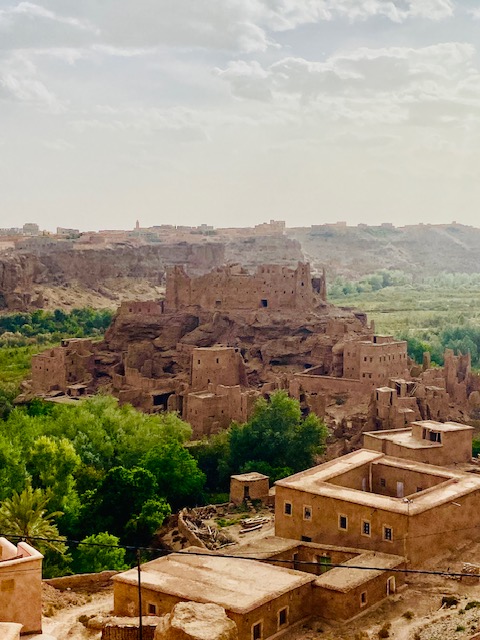
After breakfast, you have time to visitKasbah Tamnougalt with a local guide to learn about adobe-housing in southern Morocco. This is the oldest kasbah in theDra’a Valleyand is still inhabited by a few families.
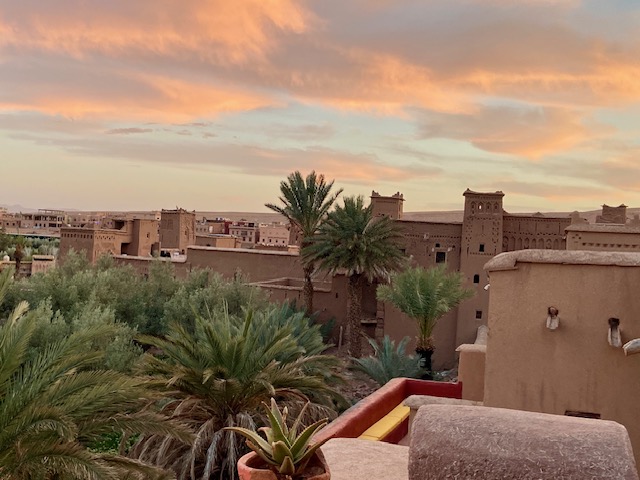
You now find yourselves in theDra’a Valley, the longest valley in Morocco, although much of the Dra’a River is now dry. Here again, the landscape and life-styles are different in this country of amazing contrasts. Following your visit to the Kasbah, you drive off-track through the extensive oases of the valley. This is an opportunity to learn more about the locality and to photograph the many fortified kasbahs, ideally positioned among the oases of date palms.
You next travel east through many Berber villages, such asN’QobandTazzarine, featured in the movie of Babel, and thenAlnif, which will be the venue for lunch. Yet again the landscapes have altered and the chain of mountains to your right are quite different from those previously seen as they march with you eastwards.
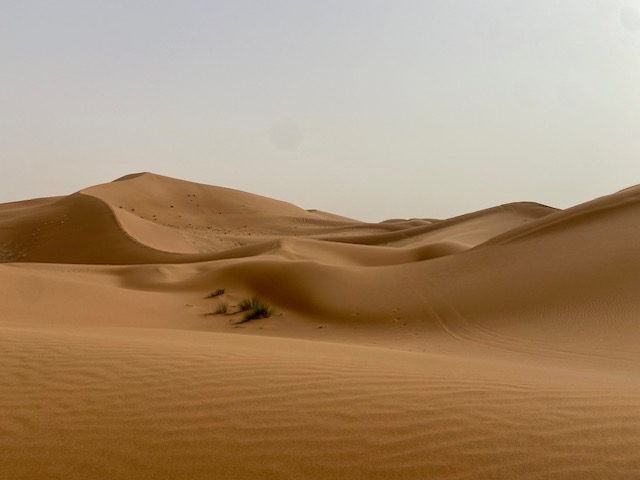
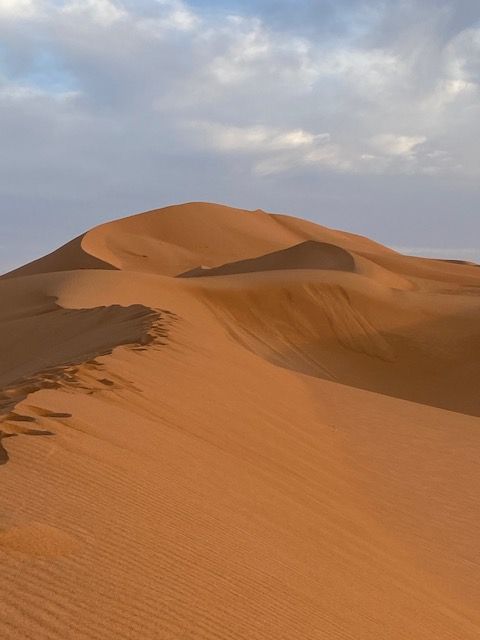
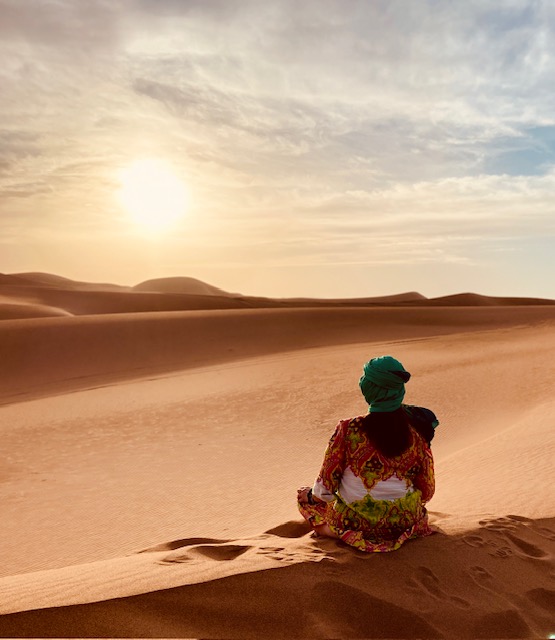
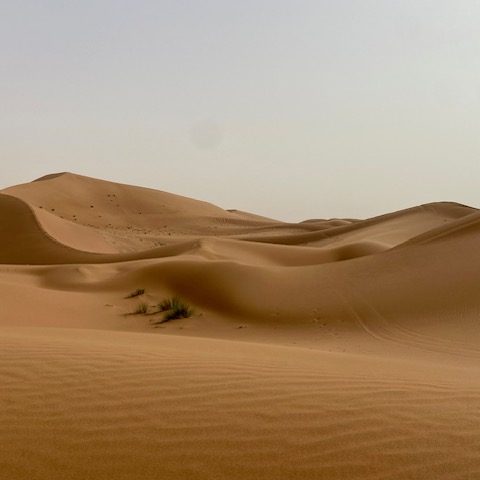
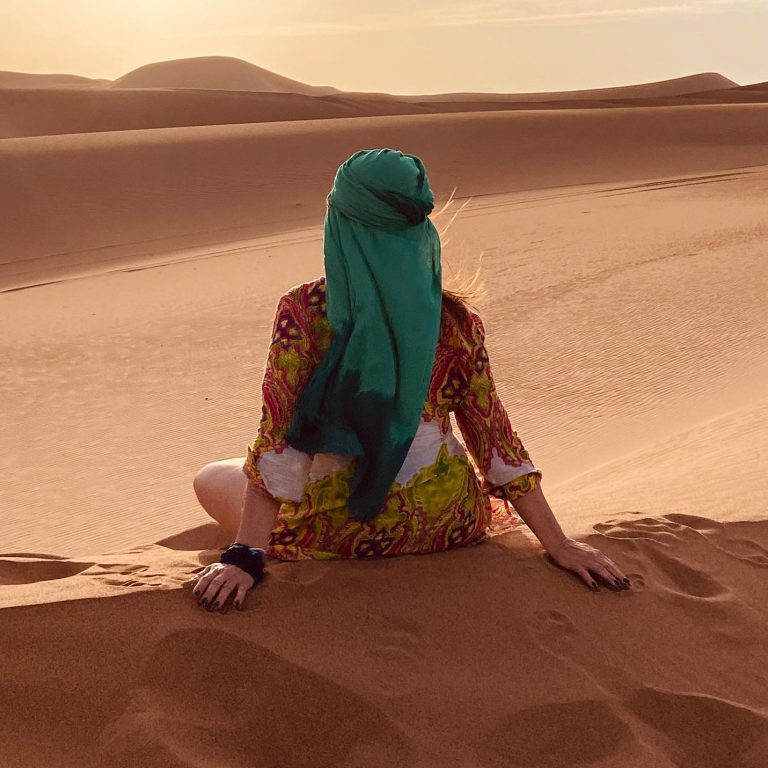
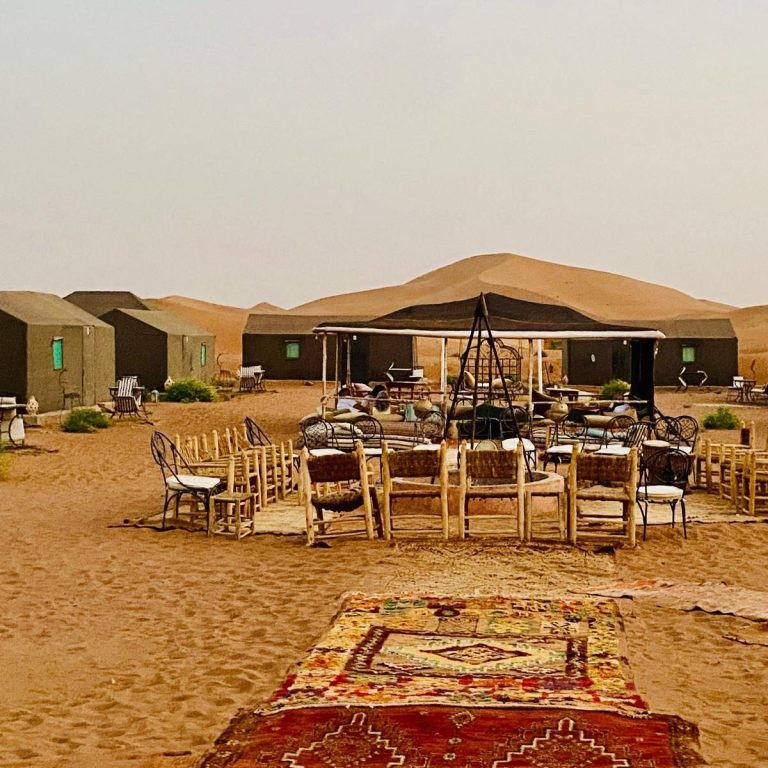
At the campsite inErg Chebbi you will be welcomed by a glass of traditional tea and Moroccan biscuits. Now the most exciting part of the whole trip is about to begin – namely your camel ride to the top of the dunes to await thesunset as thesungoes down in the direction you have come from. At night, dinner is served under the starlit sky of the Sahara, followed by Berber music and drumming around acampfire. Your private luxury desert camp tent offers a wonderfully peaceful night’s rest as, in your head, you sort out all the experiences and vistas of the day’s journey.
Day4
Merzouga
After breakfast, the full majesty of the Sahara is laid open to exploration with a day’s deserttrekkingin the dunes ofErg Chebbiwith a lunch picnic out in the open. You are accompanied by camels, and can walk behind them or ride, just as you wish. They carry everything needed to cook lunch, which will be prepared out in the dunes by your camel man.
For many active people, this is a golden opportunity to stretch your legs longer. You will walk about three hours in the morning until lunch. This is freshly prepared, giving you plenty of time to relax. Many claim this is the best meal of the whole trip as the fresh air increases their appetite. The afternoon sees another three hours before returning to the luxury desert camp for dinner.
Alternatively, you can choose to go on a half a day 4×4 tour around the dunes of Erg Chebbi to visit Khamlia village. Here in the village, you can listen to local Berbers performing sub-Saharan Gnawa music and share a glass of mint tea with them.
Back at thecamp, you can enjoy moments of peace and immerse yourself in the atmosphere of the magnificentSahara Desert. At night, dinner is served and followed by an evening of music around a campfire, before, once again, you settle for the calm and beauty of the night in your own private tent in a desert camp near the big dunes. "" Weather conditions and temperatures in South Morocco are rarely stable. Should it become too hot from May through to the end of September, we may have to advise you not to attempt the trekking in the dunes but to take this alternative instead.""
Day5
Merzouga – Ouarzazate
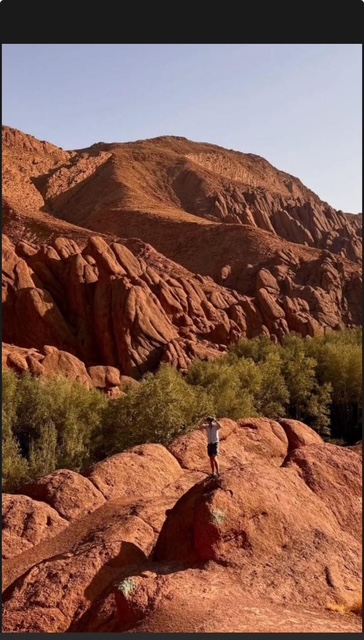
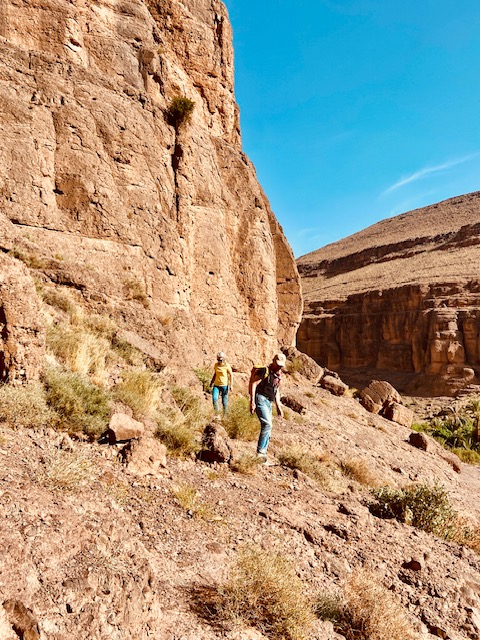
By getting up early and ascending the dunes, you will be rewarded with a spectacularsunrise with colours on the sand very different from those at any other time of day. The itinerary continues to theDades Valley, where you will have lunch as well as time for a walk through the gorges at the top of the valley. It has innumerable villages whilst the river right down below is bordered by fields and gardens particularly fig trees and olives.
From here, you continue through the Valley of the Roses as far asKel’aa M’gouna, where you could visit the local cooperatives producing cosmetic products. These are made from the local rose blossoms and famous throughout Morocco. Once again, food enthusiasts will be delighted by the quality of the rose water for ice creams and baked delights.
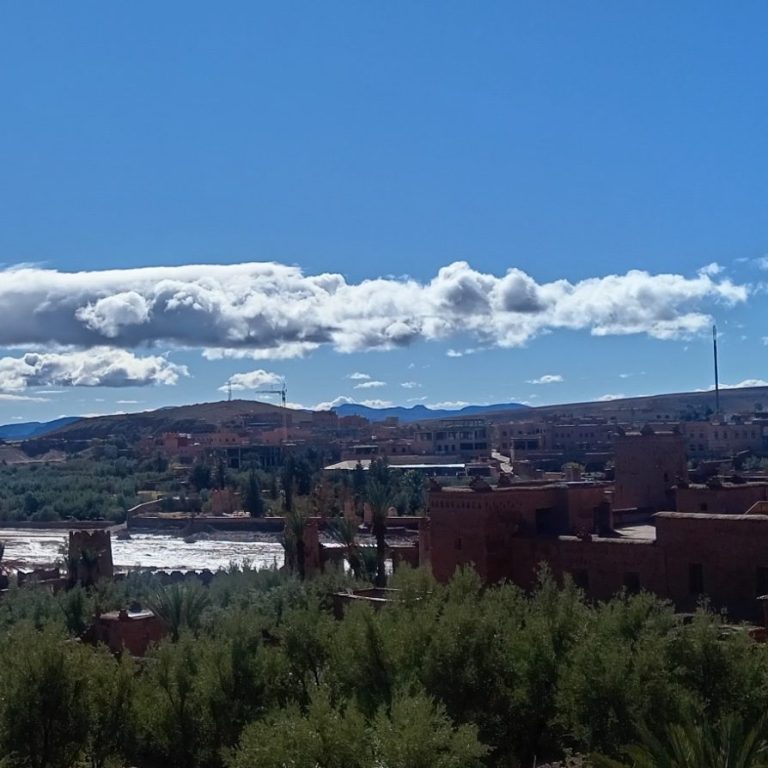
Shortly afterwards you can have a greater insight into local life in the interior of the beautifully restoredKasbah Amredhil.
From here, a 45-minute drive leads to Ouarzazate, where you spend the night in a guest house.
Day 6
Ouarzazate – Marrakech – Essaouira
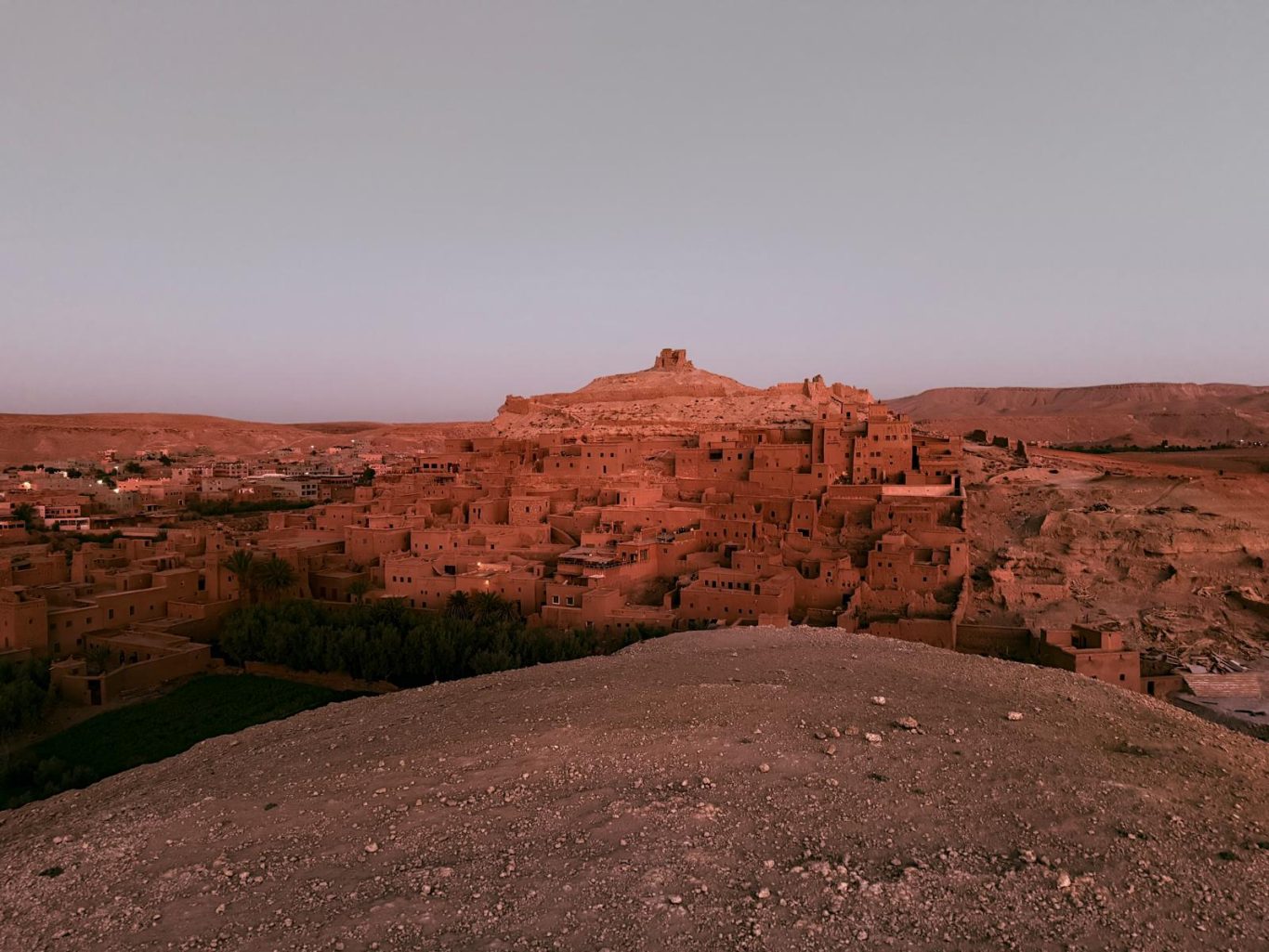
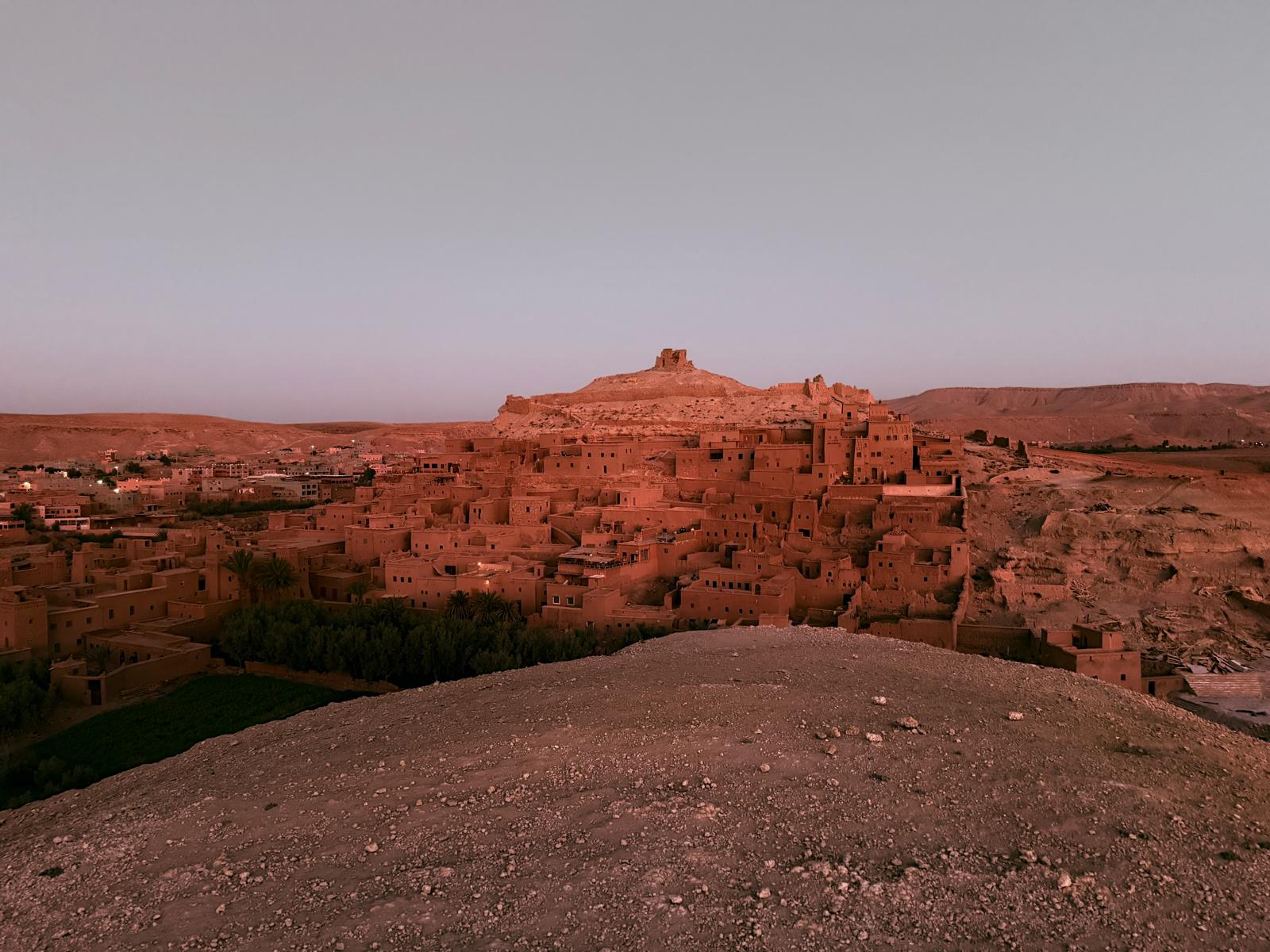
After breakfast, the itinerary takes you toKasbah Aït ben Haddou.This a UNESCO World Heritage Site that has been used as a set for many Hollywood blockbusters. It is the most famous Kasbah in Morocco and some of the buildings date back to the 17th century. Visiting the kasbah with a local guide allows you to discover its history and significance locally.
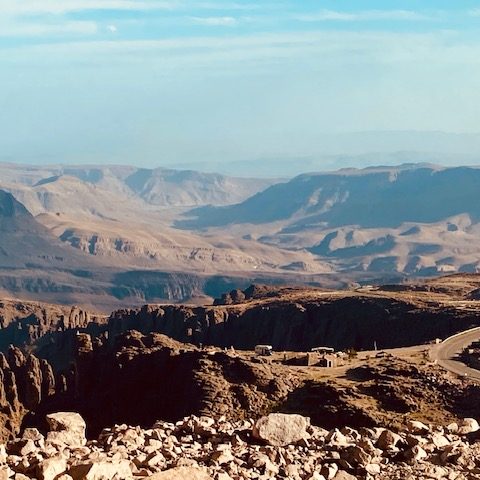
From here, you travel along the beautiful Ounila Valley, full of bends in the roads and surprises at the hues of the rock and soil as well as smaller Kasbahs.
You continue toKasbah Telouetset right in the midst of the mountains and once the seat of the last Pasha of Marrakech,El Glaoui.After lunch, pay a worthwhile visit to the Kasbah. Each addition to the building now stands in ruins exposed to the wind and the rain, having been abandoned and plundered. But wait to be pleasantly surprised by the traditional interior decoration as you reach the farthest end of theKasbah.
Unfortunately, the whole Kasbah is now closed due to the damage caused by the earthquake that struck Morocco in September 2023. Nevertheless, it is stillworth visiting the exterior with a local guideto discover its rich history.
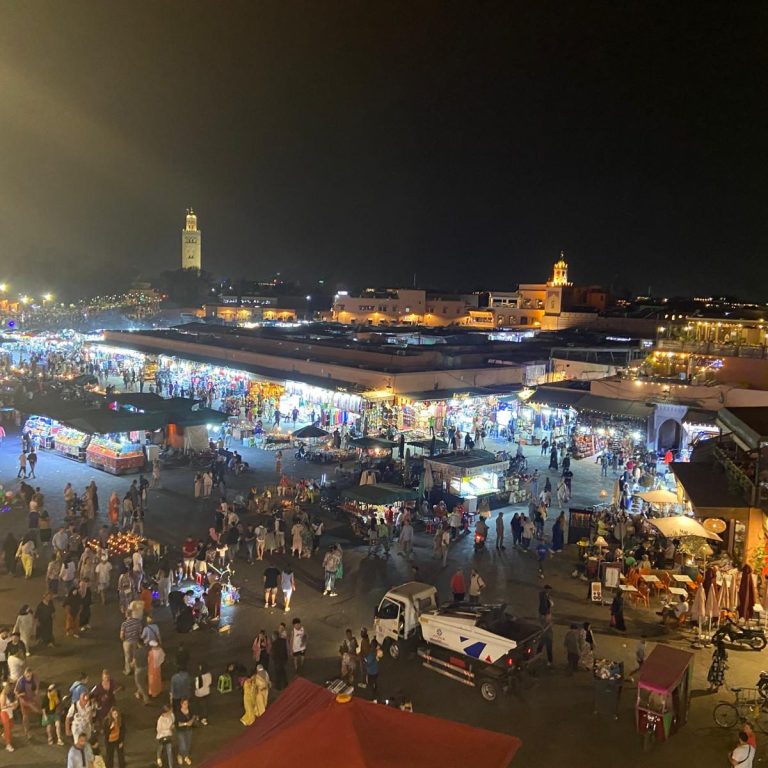
At the end of the afternoon, the final jaw-dropping experiences on this desert trip await you with marvellous panoramas from the High Atlas Mountains before taking the motorway from Marrakech back to Essaouira.
Your Essaouira to Merzouga desert tour comes to an end when your driver escorts you to your hotel.
What is included in this desert tour from Essaouira:
- Transport in a private air-conditioned vehicle; 4×4 Toyota Prado TX or deluxe van and fuel
- Pick-up from your hotel in Essaouira and drop-off at your riad in Marrakech
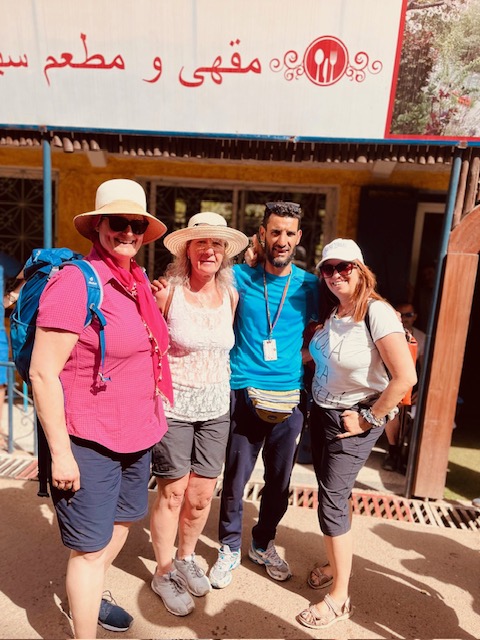
- Experienced local English/French/Spanish/Italian-speaking Berber and nomad driver-guide
- Accommodation in air-conditioned rooms/suites with private bathroom
- Two nights in a luxury desert camp in Erg Chebbi dunes with a private toilet and shower, lamps, traditional Moroccan handmade furnishings and plenty of space
- All meals; breakfast, lunch, dinner – with vegetarian and vegan options available
- A camel ride with a guide. And if you wish to do some sandboarding, just speak to the camp staff!
- A full day camel trekking in the Merzouga desert
- An option to go to and return from the camp by 4×4
- Luggage service to the camp and all accommodation
- Berber drumming and music
- Free time to explore the sites such as Ait Ben Haddou, the Ounila Valley, for walks, photos, and tea/coffee breaks
- The opportunity to ask the driver to stop when and where you wish
- Entrance fees and local guide
- Tea, coffee, and mineral water in the desert
What is not included:
- Drinks
- Tips
- Extras
What to know about your Essaouira to Merzouga tour:
- This Essaouira to Merzouga desert tour can be customised to accommodate your personal points of interest.
- According to weather conditions from May to the end of September, it may be necessary to take the second option in the programm Here is a to help plan for your Moroccan desert tour.
- We require a 30% deposit of the total price to confirm the booking while the balance is paid to us in the office in Ouarzazate
- We offer a 25% discount for all children under 12, while, in any one family, one child below 3 can travel free of charge
- The balance is payable through PayPal, bank transfers in Europe, by credit card, or cash (USD, euro, GBP, or MAD)
- Our prices can be subject to an increase over the busy season, and, in particular, the Christmas and New Year’s Eve period.
Essential Tips to Plan Your Holiday in Morocco - Magic Morocco Agency
-If your holiday with Magic Morocco involves trips out to the vast expanse of the Sahara Desert, where you may be staying for several days, up to a week, or longer, you will need to be prepared. Here are some useful items that we recommend you pack before you leave on your trip of a lifetime to Morocco.
- A sleeping bag: While we provide plenty of blankets and sheets for your tented desert accommodation, it does get very cold in the Sahara on a winter’s night. Bring along your own sleeping bag, so that you’ll be snug as a bug under the spectacular, if chilly, Moroccan night skies, studded with a galaxy of shimmering stars. This is only really required on trekking over several nights or on the Sufi Retreat.
- A turban or scarf: This is an essential item when heading out on Morocco desert tours, as the simple garment will protect your face and hair from the harsh sun, as well as any sand that gets whipped up by the wind. If you’ve arrived for your holiday in Morocco and find you don’t have a turban — known locally as a “shesh” — or scarf, don’t worry. You can easily buy a “shesh” at a local shop or bazaar.
- Warm clothing: You’ll need to bring some warm clothes when you embark on a Morocco desert tour. Although temperatures are high in the Sahara during the day, they plummet at night, due to a lack of cloud to keep the heat in. While you might think you don’t need to pack heavy clothing for a trip to hot Morocco, you will need it when you’re out in the desert in the evenings in early spring, late autumn, and the winter.
- High-factor sunscreen to combat the strong sun.
- Good quality sunglasses that can filter out the sun’s harmful rays and protect your eyes.
- Solid footwear, such as good trainers, for all the walking you will be doing. Trainers are ideal footwear, whilst walking barefoot in the dunes can also be practical.
- Plenty of bottles of water for the car, but we provide enough bottled water for each person in the desert.
- You might also like to pack a torch and a Swiss army knife, and above all you should make sure that you bring lots of water with you on every car journey in the Sahara. We will of course provide water at the camps you’ll be staying at.
- Being well prepared for your Morocco desert tour will ensure that you have the time of your life on your desert magic tour.
In Morocco, as travellers, we are paying guests, exploring and learning about age-old traditions and fascinated by a world so different from our own. Customs and traditions based either on religion or habits passed down from generation to generation can seem strange, unusual, or odd. Listening, learning and observing, without necessarily understanding and without passing judgment, can enhance our pleasure of participating in this other existence.
As we move around and through this environment, we leave behind impressions of ourselves and our own world – we are the most important ambassadors. Let us ensure that the memories we leave are ones of warmth, generosity, openness, curiosity, modesty and respect for this different society and for the environment which others experience on a daily basis. Moroccans are very welcoming and hospitable people and it behoves us to keep faith with this.
Environmental aspects
The desert is very much alive – witness the myriads of animal tracks on your morning climb to watch the sunrise. It is also other people’s living space. With this in mind, and considering also that the dryness of the desert means that even a paper tissue rots only exceedingly slowly, please be careful to remove all litter.
Throughout Morocco it is important that we are conscious and careful of our water consumption. This is a country under constant threat of drought. We are all individually responsible for maintaining a sustainable environment wherever we are.
Of course, there are scorpions and snakes in the desert, but these rarely pose a danger and they avoid the proximity of humans. Only in summer is it advisable to keep an eye out. The reason for the guide along with you is for your own safety. Please do not venture beyond sight of the camp alone, as it is easy to lose a sense of orientation in the dunes.