CITY BY CITY PLAN
Designed to let you pick how many days to spend in each place while keeping the yoga–culture–relaxation balance.
Program details
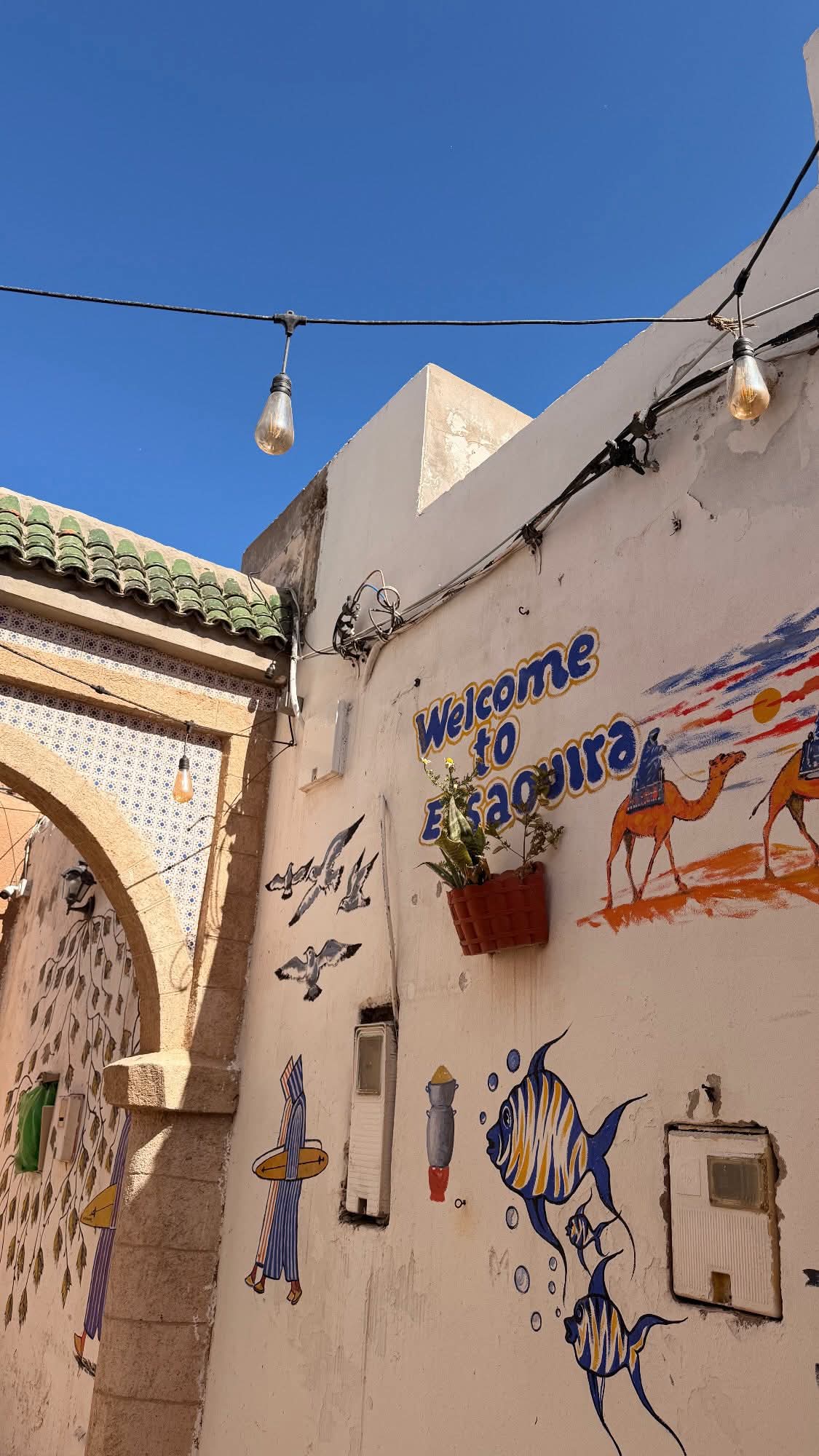
Essaouira
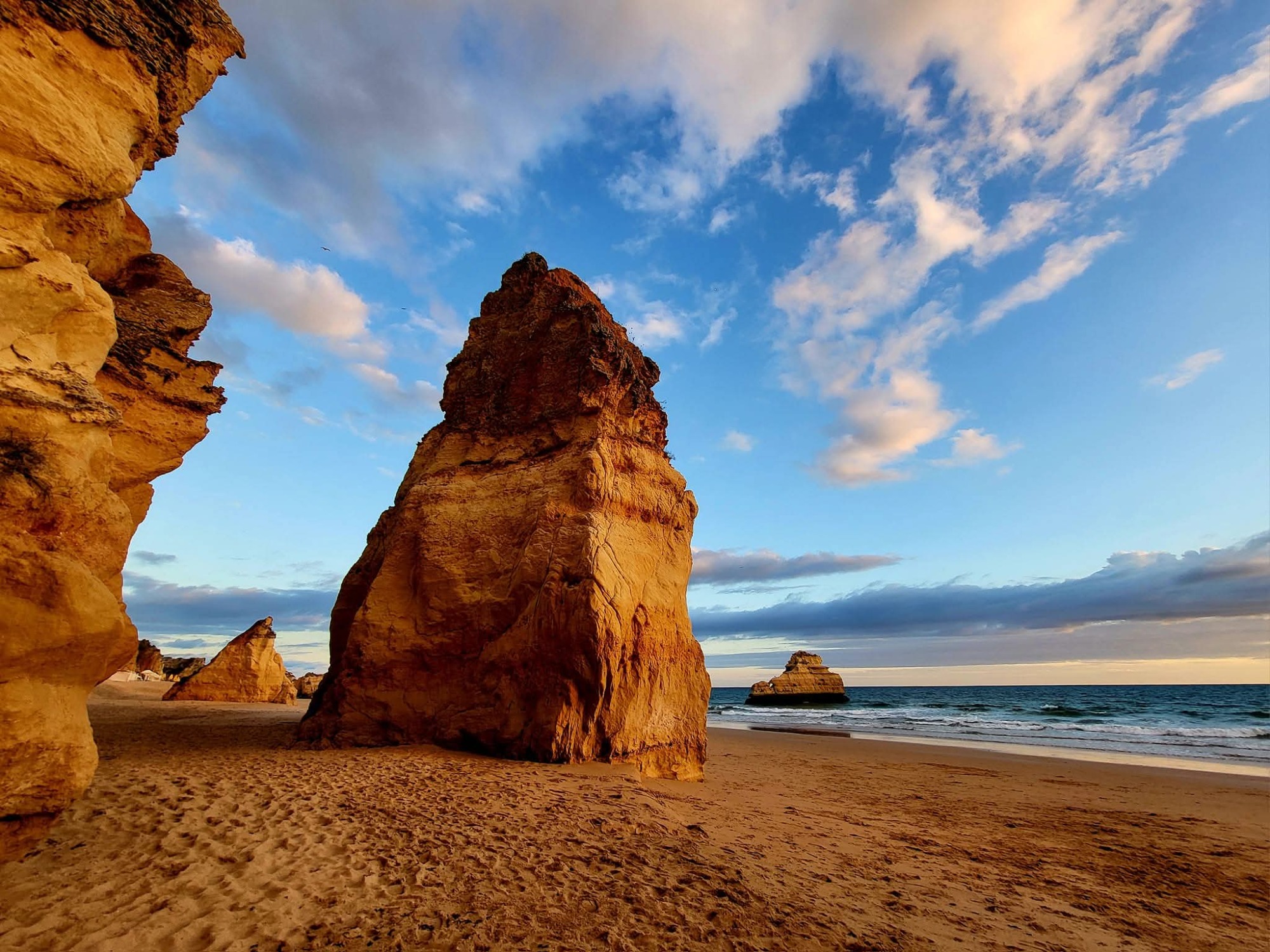
- Snapshot: Breezy coastal gem with historic ramparts, Gnawa music, Thuya wood craft, and argan.
- Suggested stay: 2–3 days.
Day1
- Arrival and riad check-in (medina or near the beach).
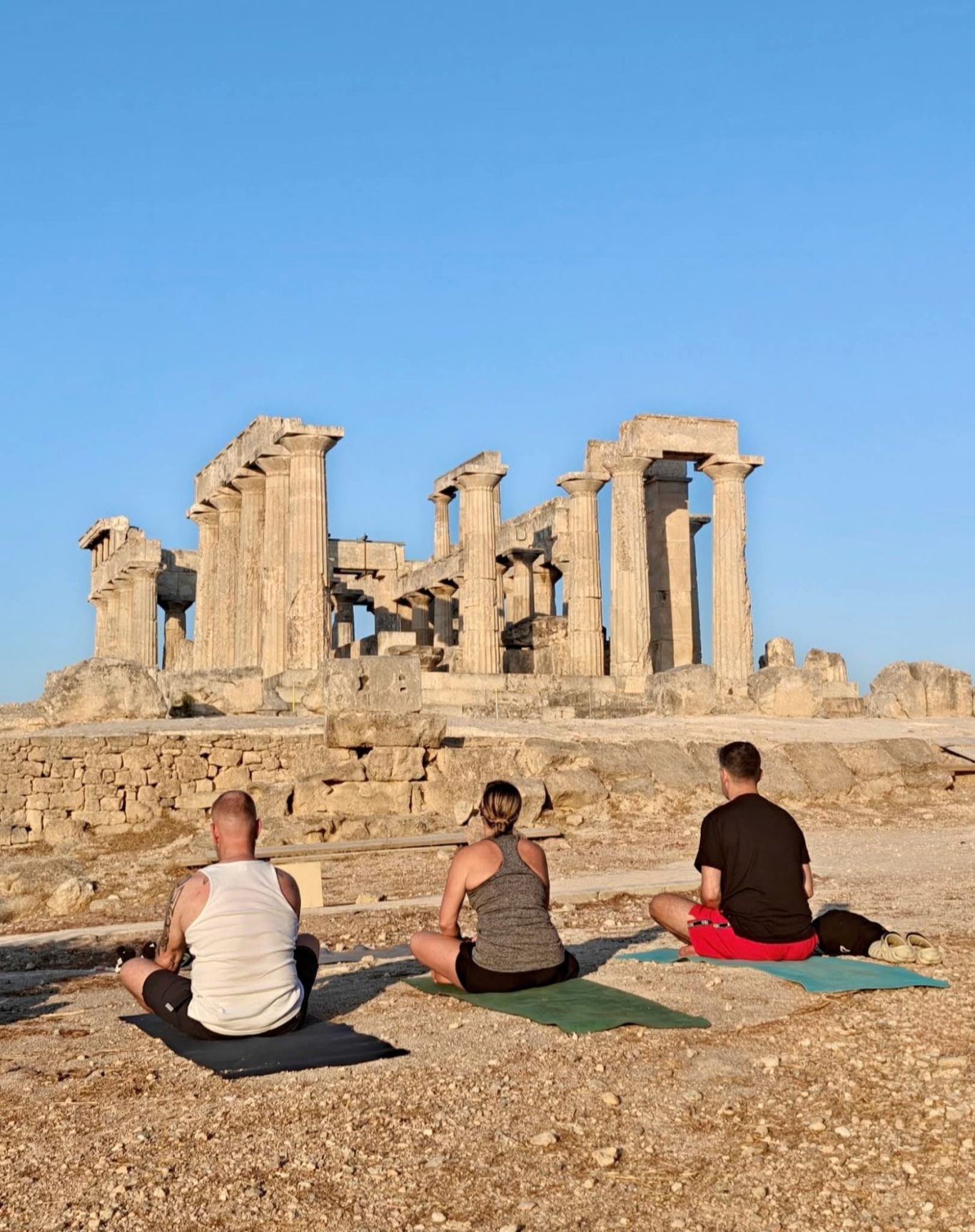
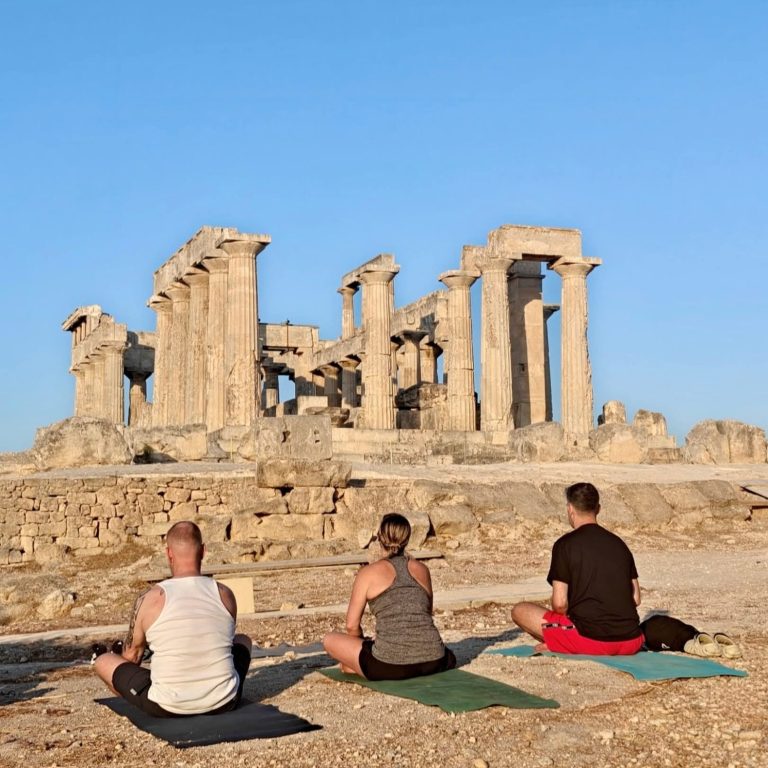
- Sunset yoga on rooftop or sand to unwind after travel.
- Evening stroll: Skala ramparts, white-and-blue alleys, the port.
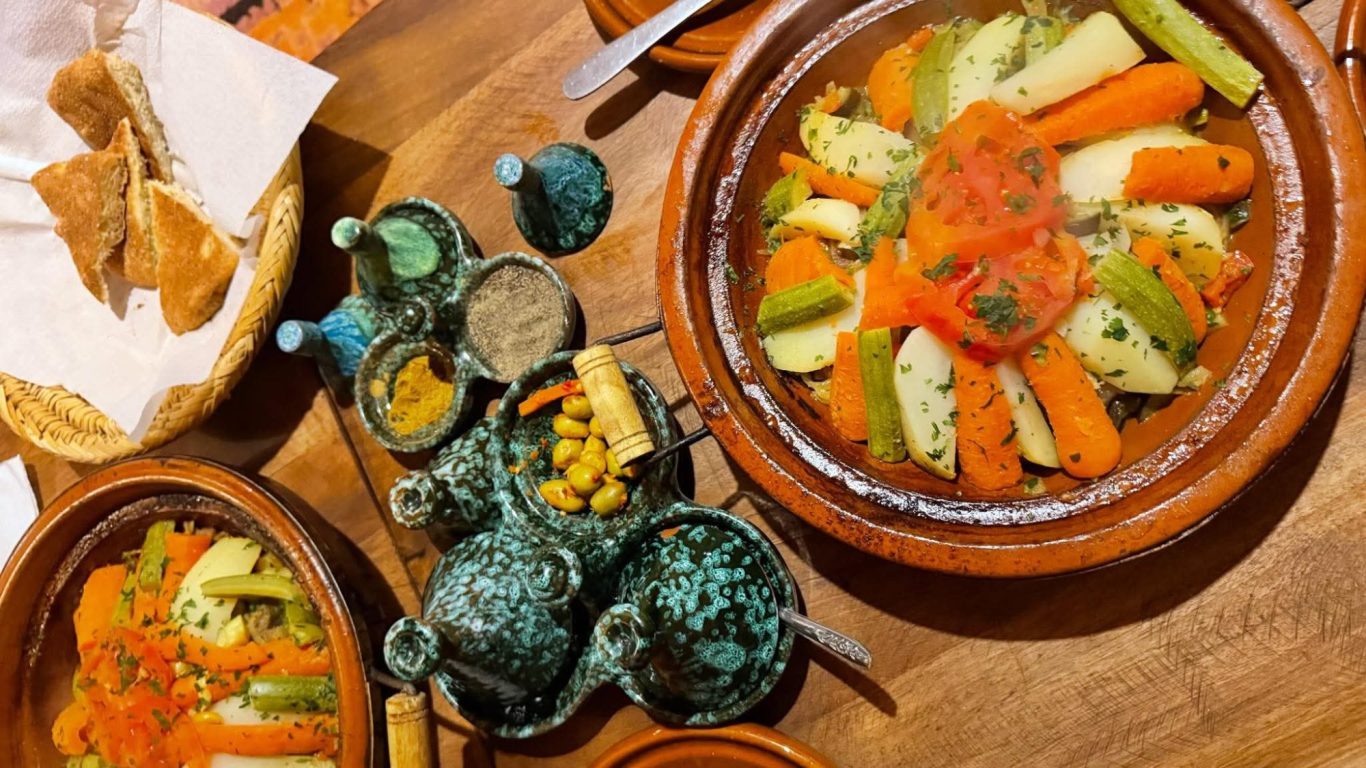
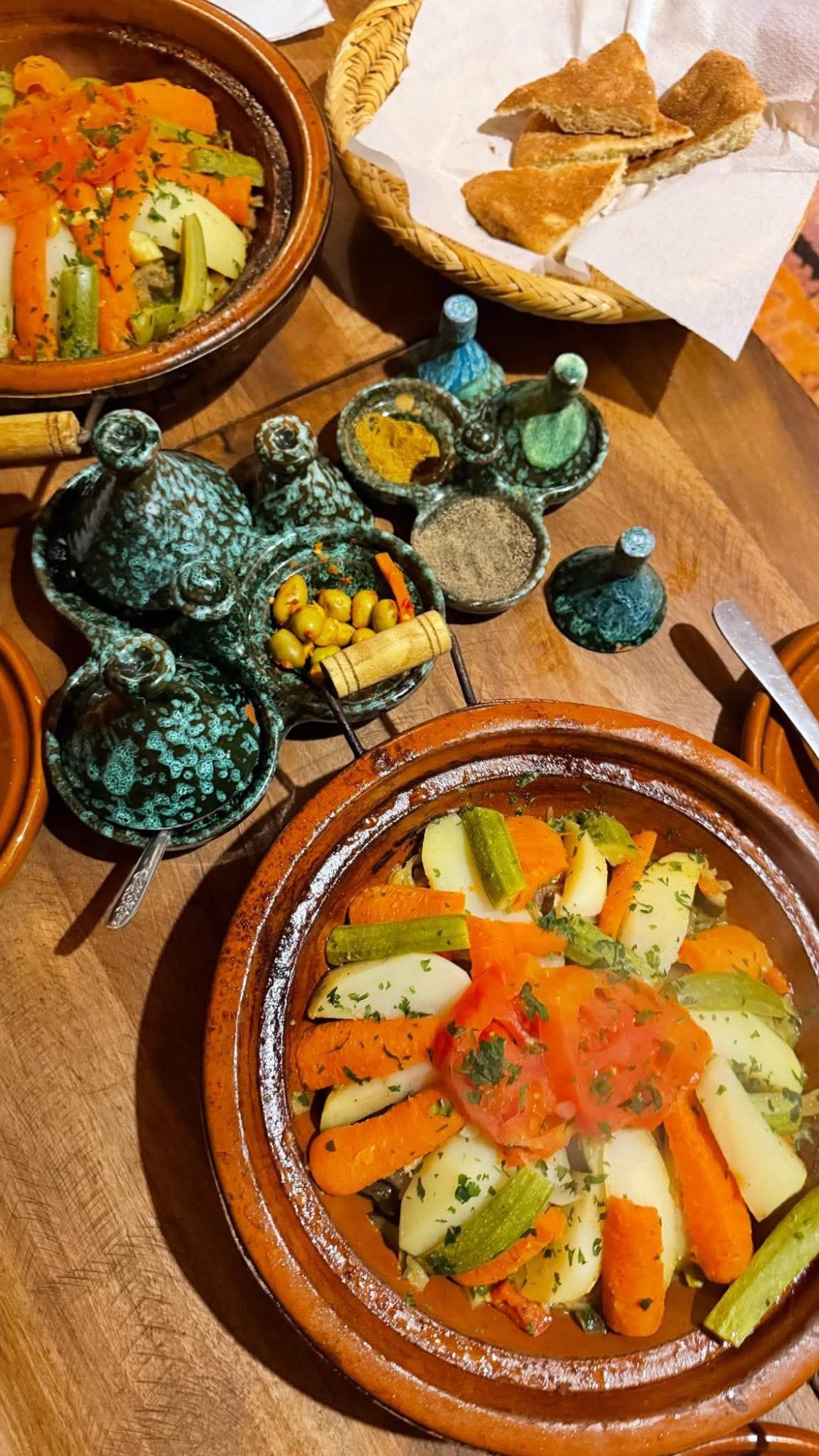
- Welcome dinner: fish tagine with chermoula or seafood pastilla.
Day2
- Morning yoga with ocean-breath practice.
- Seafood cooking class: visit the port to buy the catch, then prepare fish tagine + zaalouk and country bread.
- Thuya wood inlay workshop: make a small box or pendant.
- Moroccan hammam (argan-oil scrub) and relaxation.
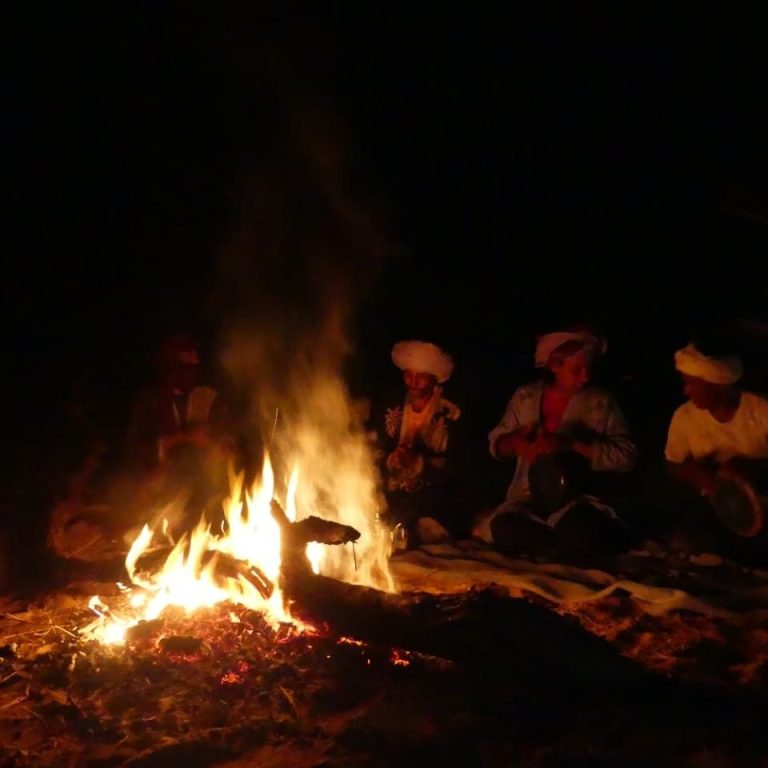
- Live Gnawa night with mint tea.
Day3 (optional)
- Sunrise yoga at Sidi Kaouki or Diabat beach.
- Women’s argan cooperative: hands-on pressing and natural oil/soap blending.
- Free time shopping: leather, pottery, light caftans; sunset walk on the ramparts.
Extras
- Horse riding in Diabat, kitesurfing for wind lovers, golden-hour photo session on the Skala.
Next transfer To Agadir: about 3 hours along the coast.
Agadir
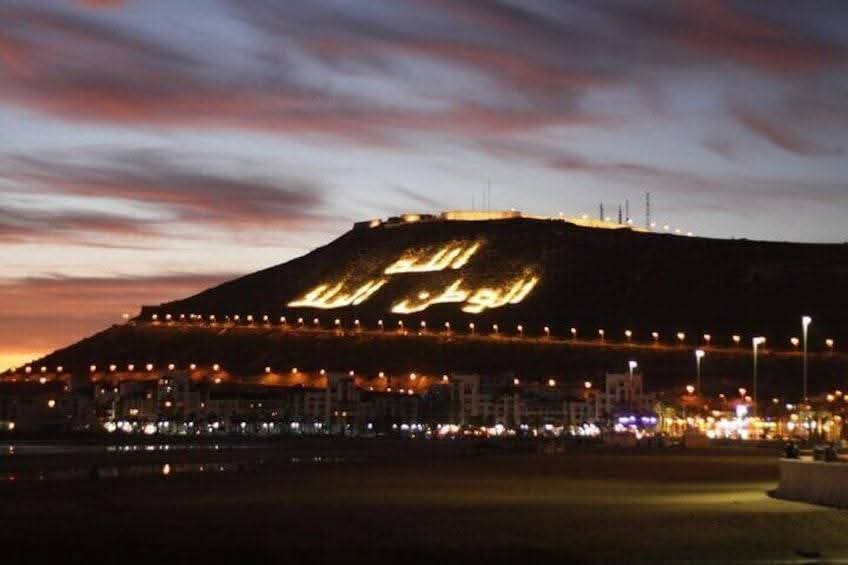
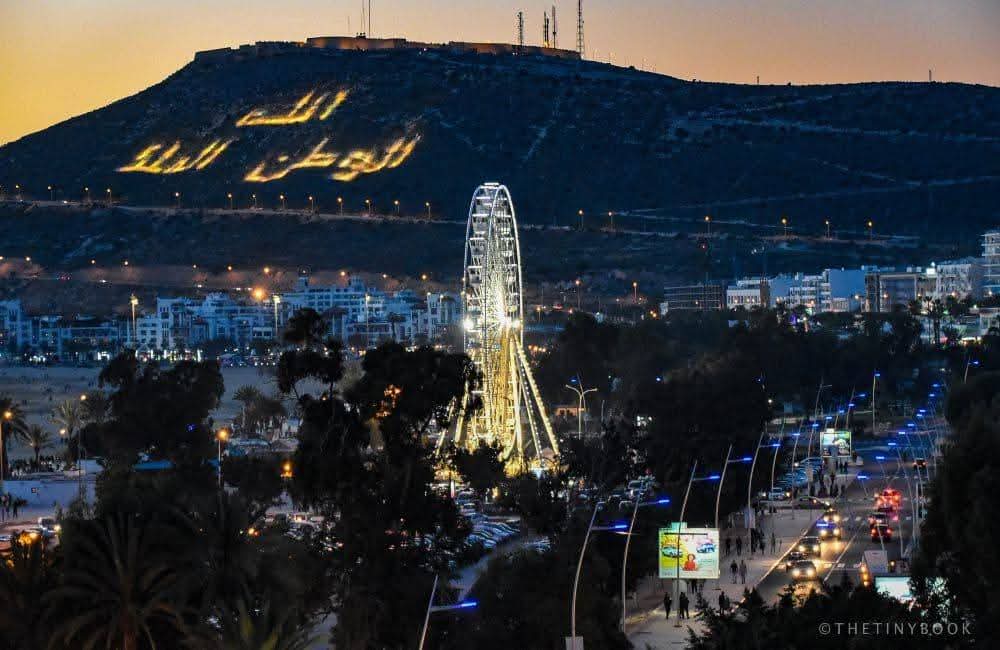
- Snapshot: Modern seaside city with a long promenade, bustling Souk El Had, near Paradise Valley and Taghazout.
- Suggested stay: 2 days.
Day1
- Morning yoga on the beach or in garden settings.
- Souk El Had visit: spices, baskets, handicrafts; pick fresh items for cooking class.
- Amazigh cooking class: “Agadiri fish tagine” with chermoula or harira + chicken pastilla.
- Moroccan hammam and optional argan-oil massage.
- Restorative evening yoga to quiet the mind.
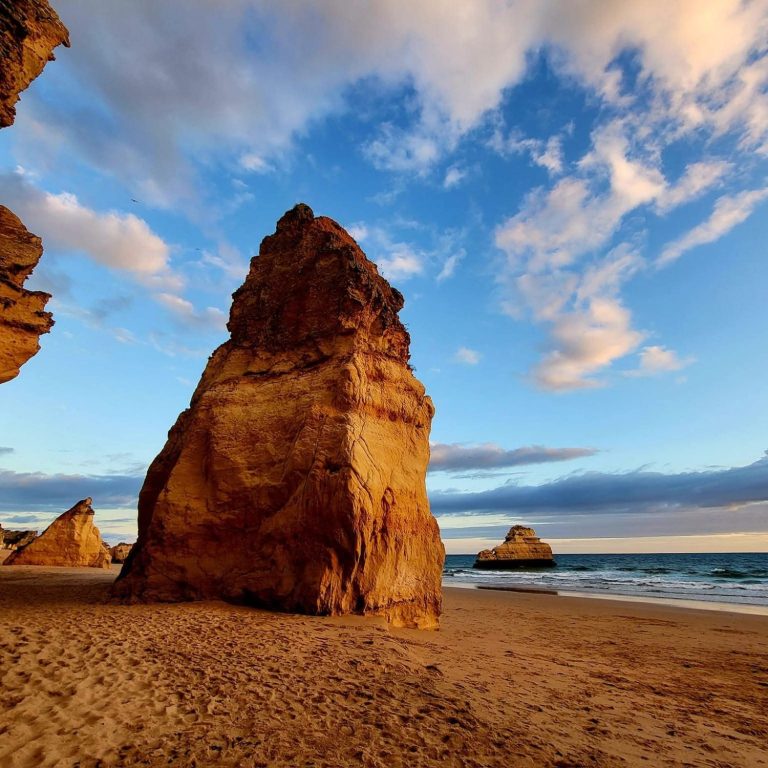
Day2
- Paradise Valley outing: gentle hike, natural pool swim, meditation among palms.
- Picnic-style lunch; return and siesta time.
- Optional: beginner surf lesson in Taghazout or walk up to Agadir Oufella for city views.
- Dinner with Amazigh flavors: lamb with prunes or chicken with preserved lemon.
Extras
- Crocoparc, Amazigh Heritage Museum, promenade bike ride.
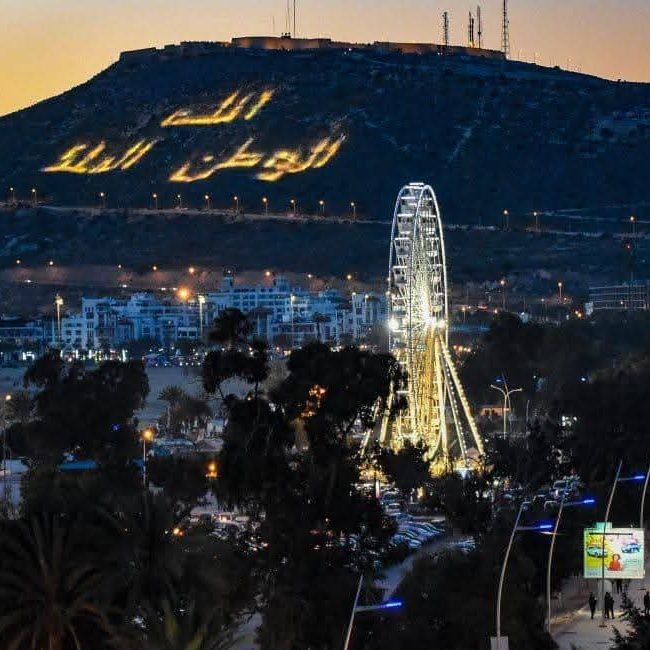
Next transfer To Ouarzazate: via Taroudant/Taliouine/Taznakht: 5–6 hours with saffron and rug stops.
Ouarzazate
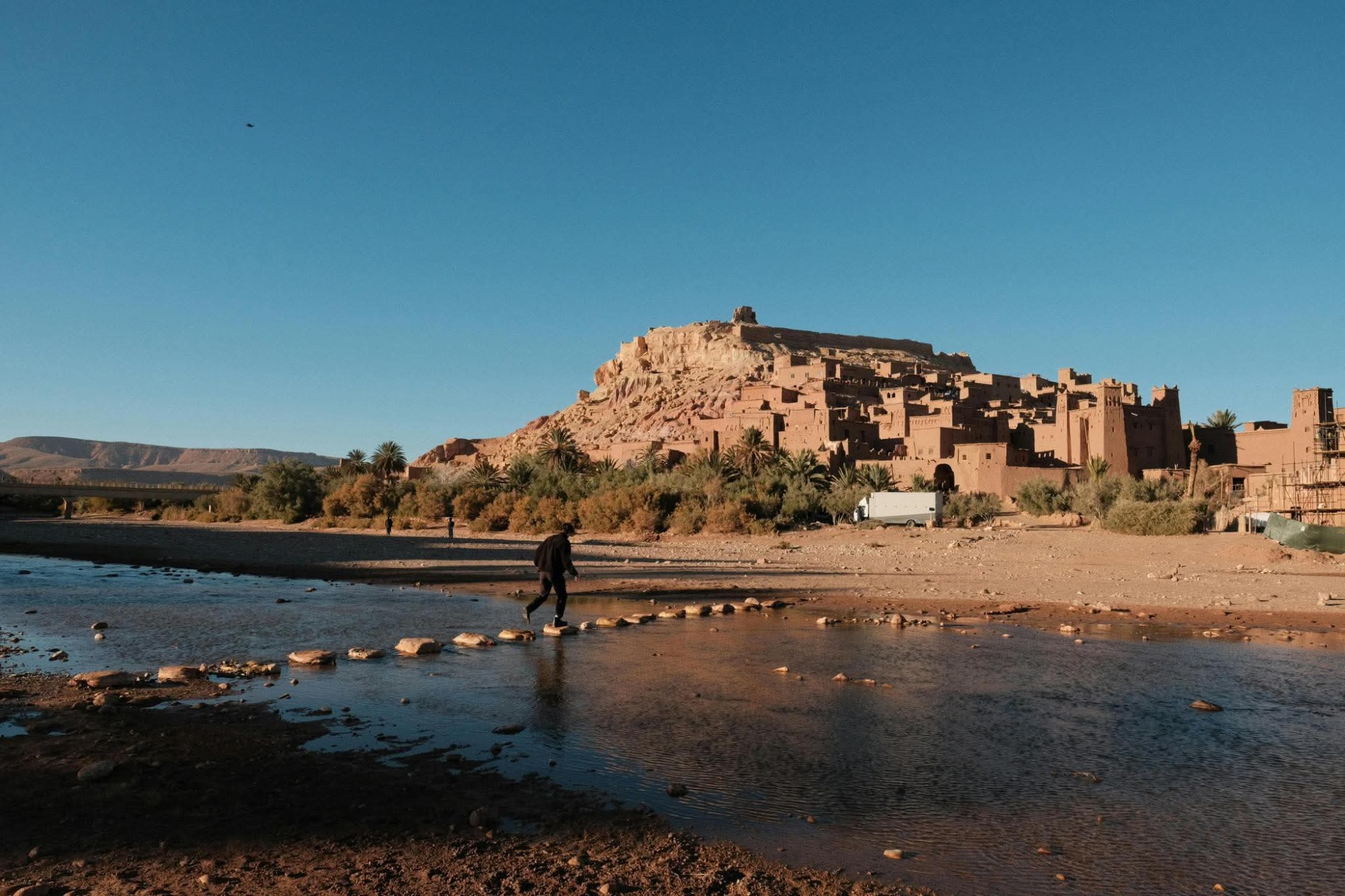
- Snapshot: Gateway to the desert—kasbahs, oases, and film studios close to Aït Ben Haddou.
- Suggested stay: 2 days.
Day1
- Morning yoga on a terrace overlooking adobe kasbahs.
- Taourirt Kasbah and film studios + Cinema Museum.
- Cooking class: Friday couscous with seven vegetables; spice heritage of the Atlas & Draa.
- Evening coffee on Place 3 Mars; gentle yoga before bed.
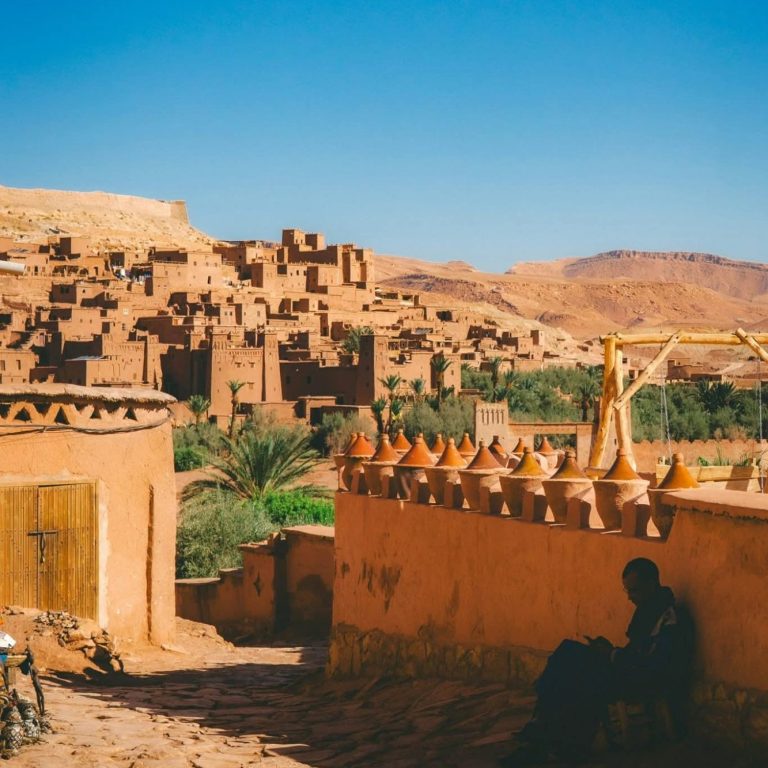
Day2
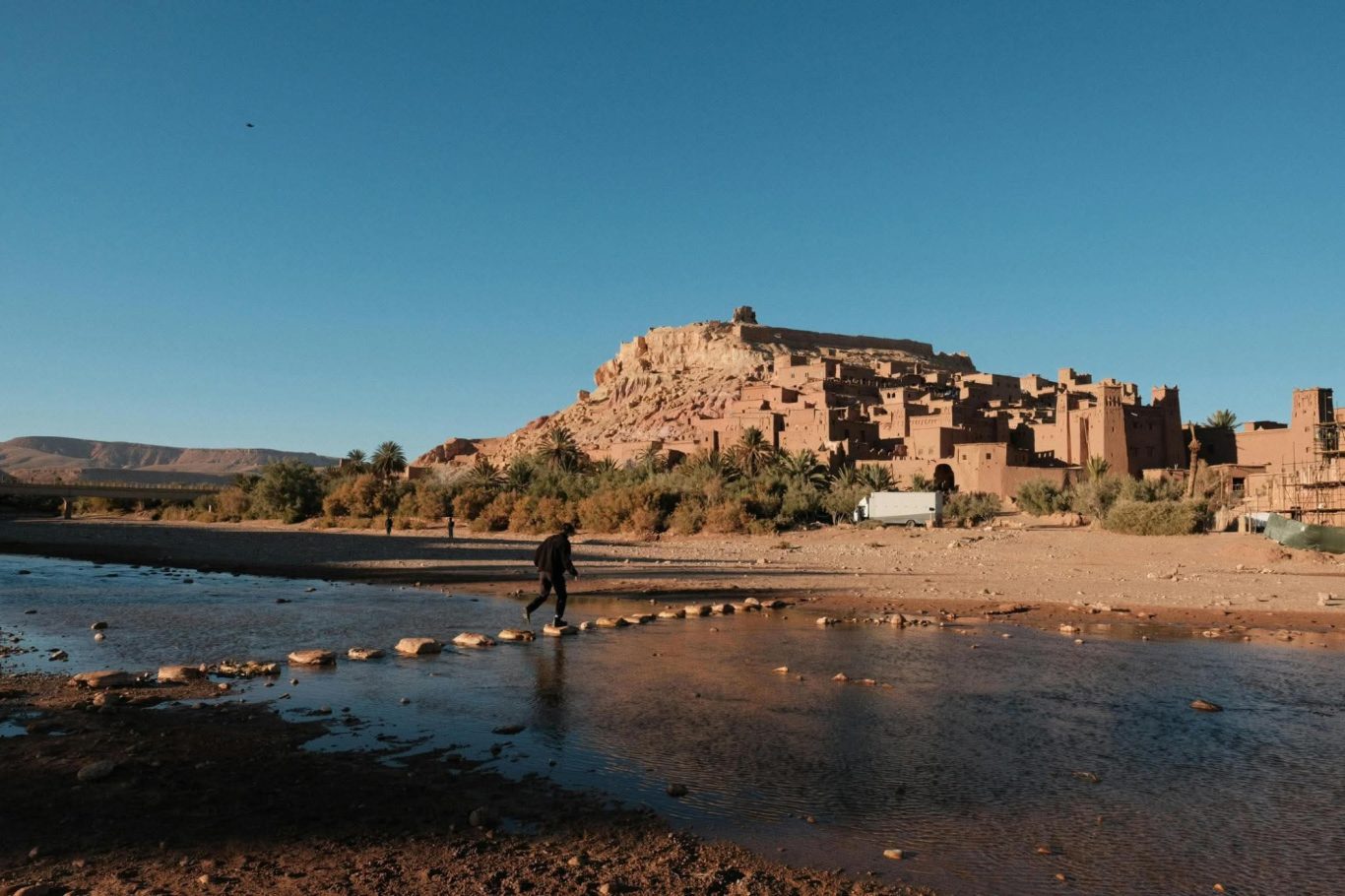
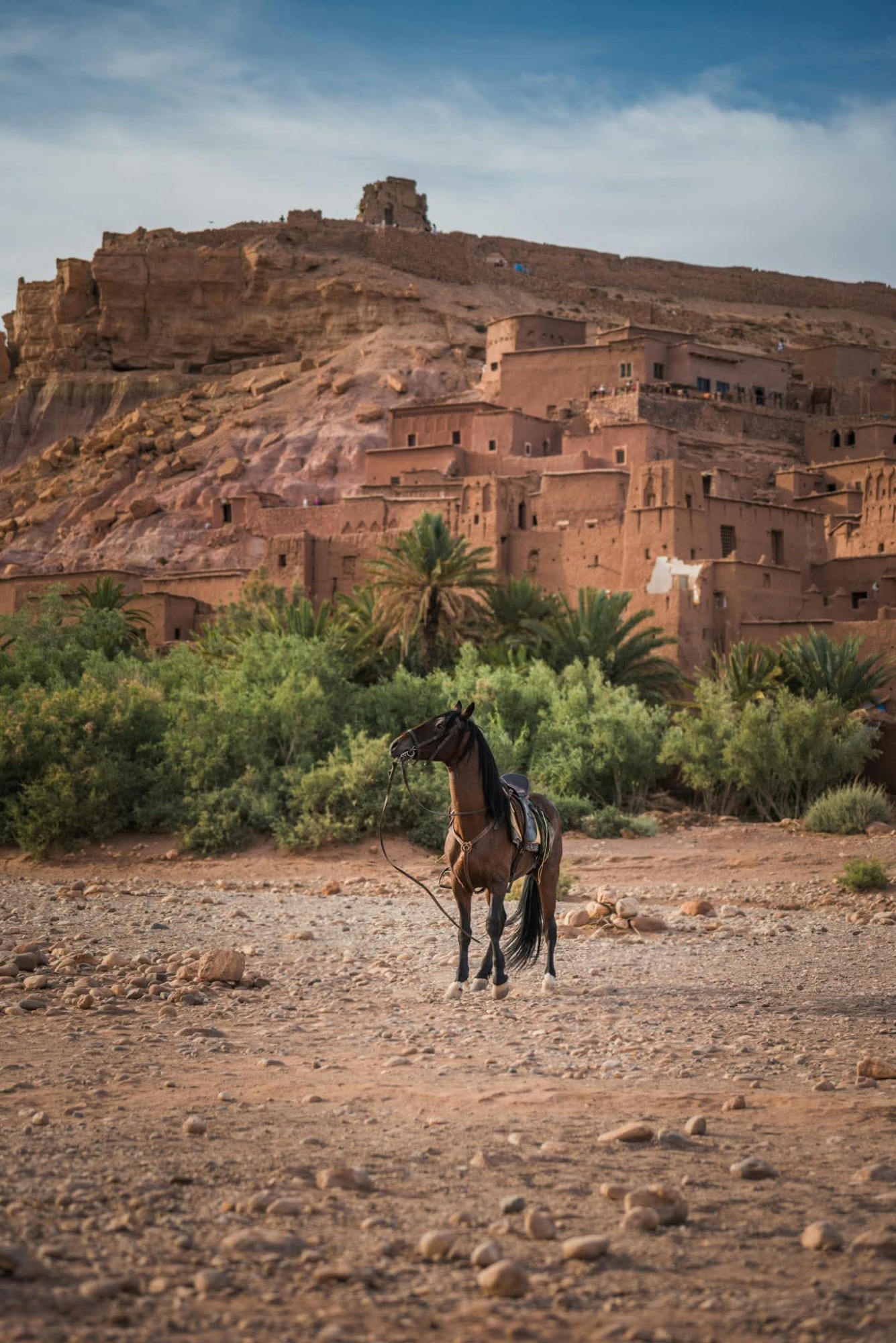
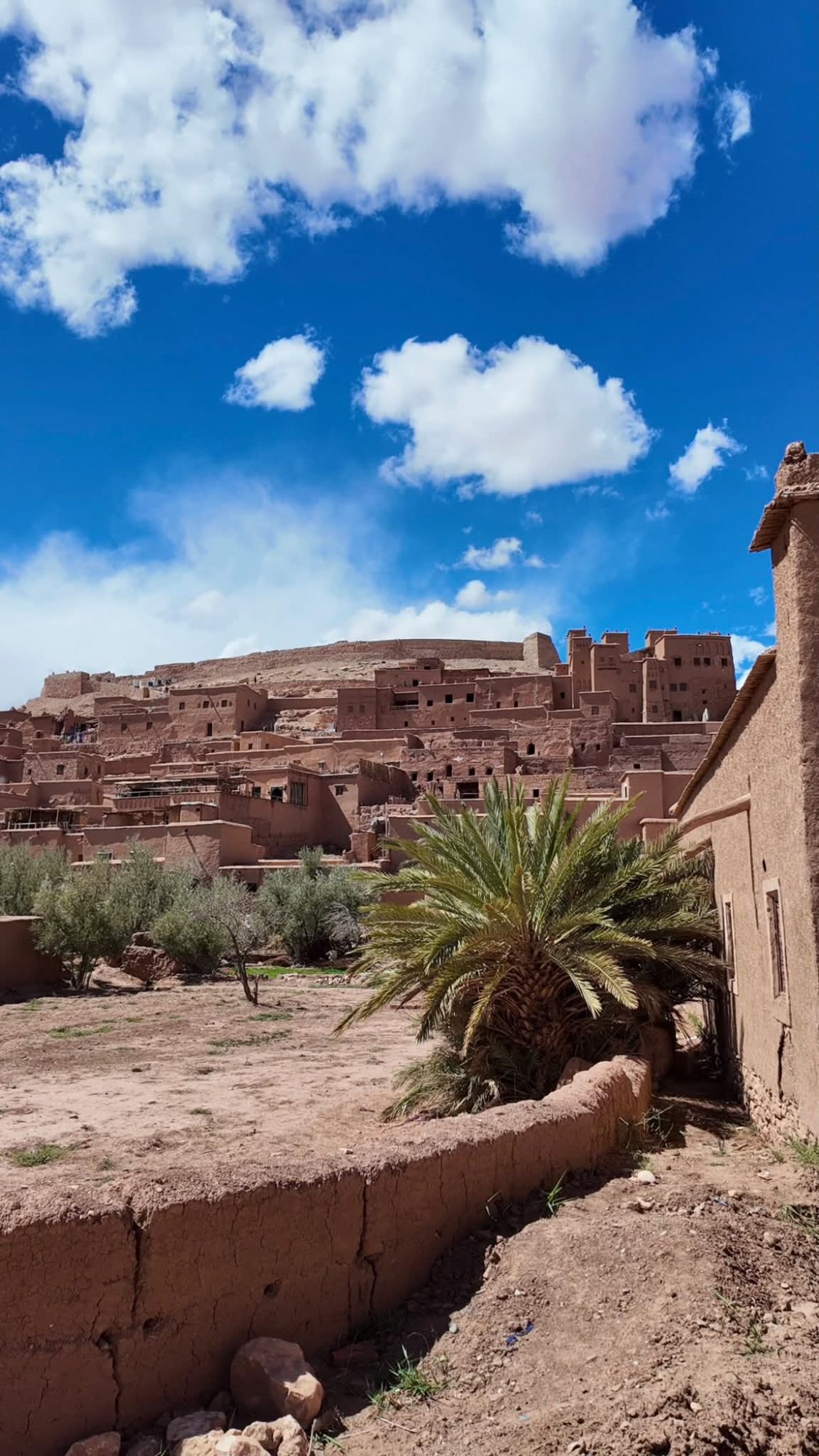
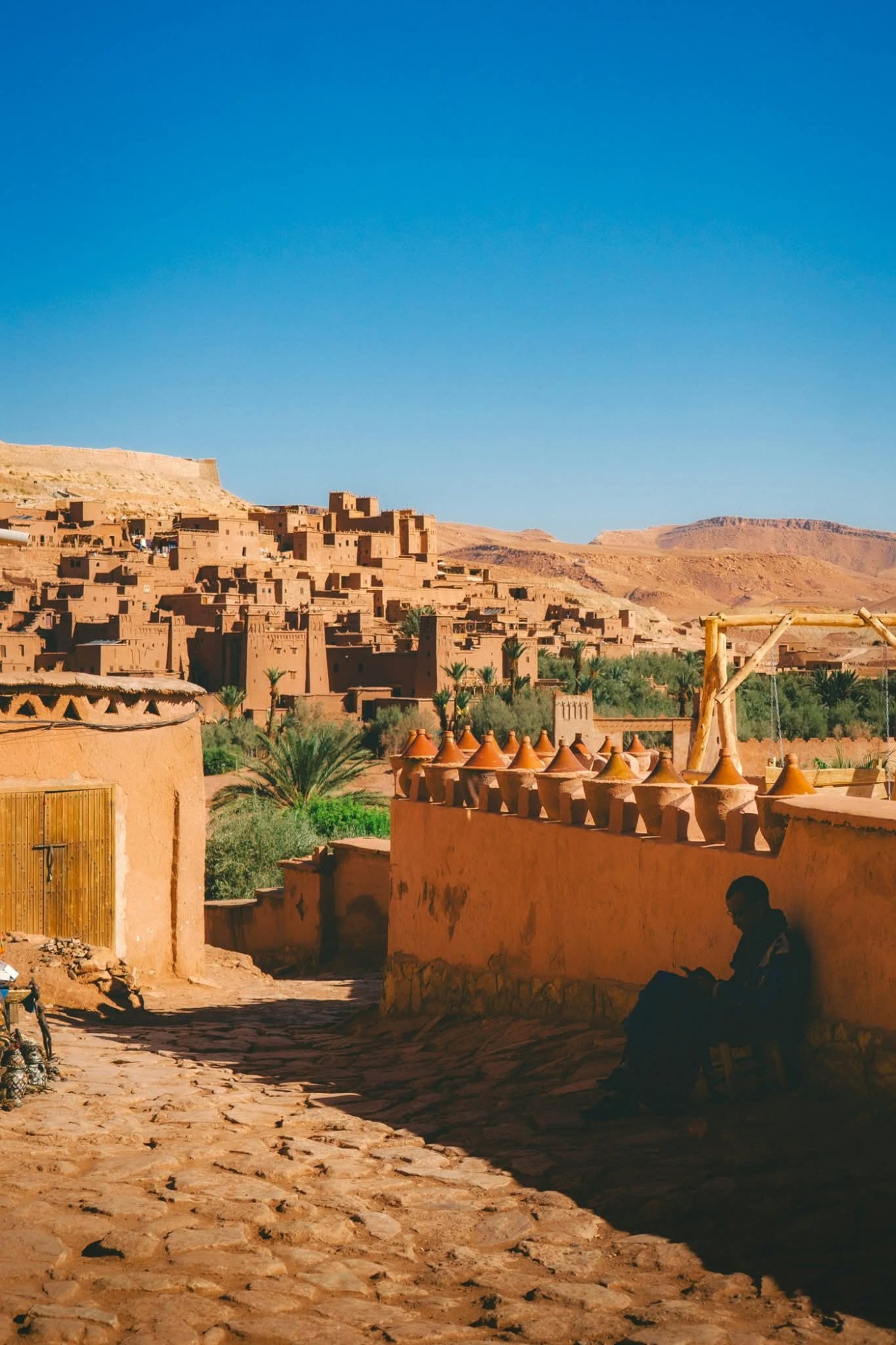
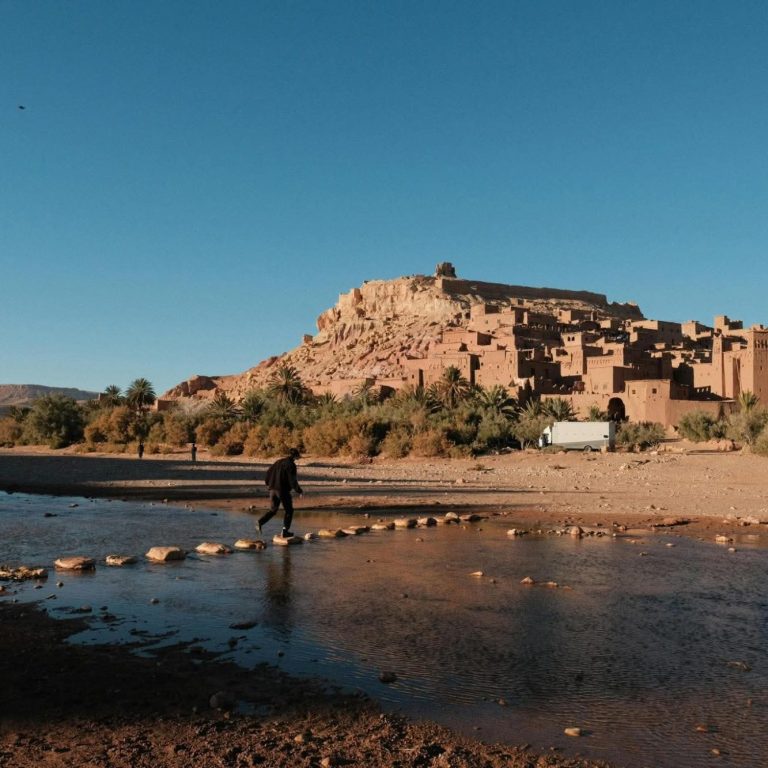
- Aït Ben Haddou excursion: wander the earthen alleys; quiet moment by the river.
- Visit Fint Oasis or Skoura palm grove and Amridil Kasbah.
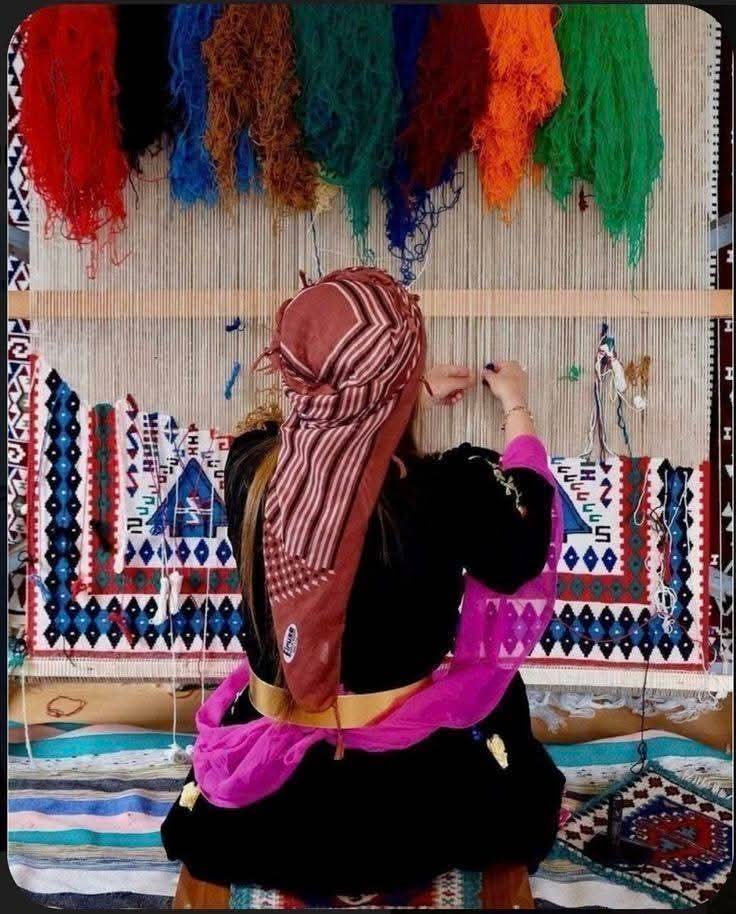
- Rug workshop in Taznakht (can be done en route): learn stitches, patterns, weave a small keepsake.
- Amazigh dinner with short live music.
Extras
- Golden-hour photo session at Aït Ben Haddou; mini “film-making” workshop at the studios.
Next transfer To M’Hamid via Zagora and the Draa Valley: ~5 hours, stopping in Tamegroute.
M'Hamid(M'Hamid El Ghizlane)
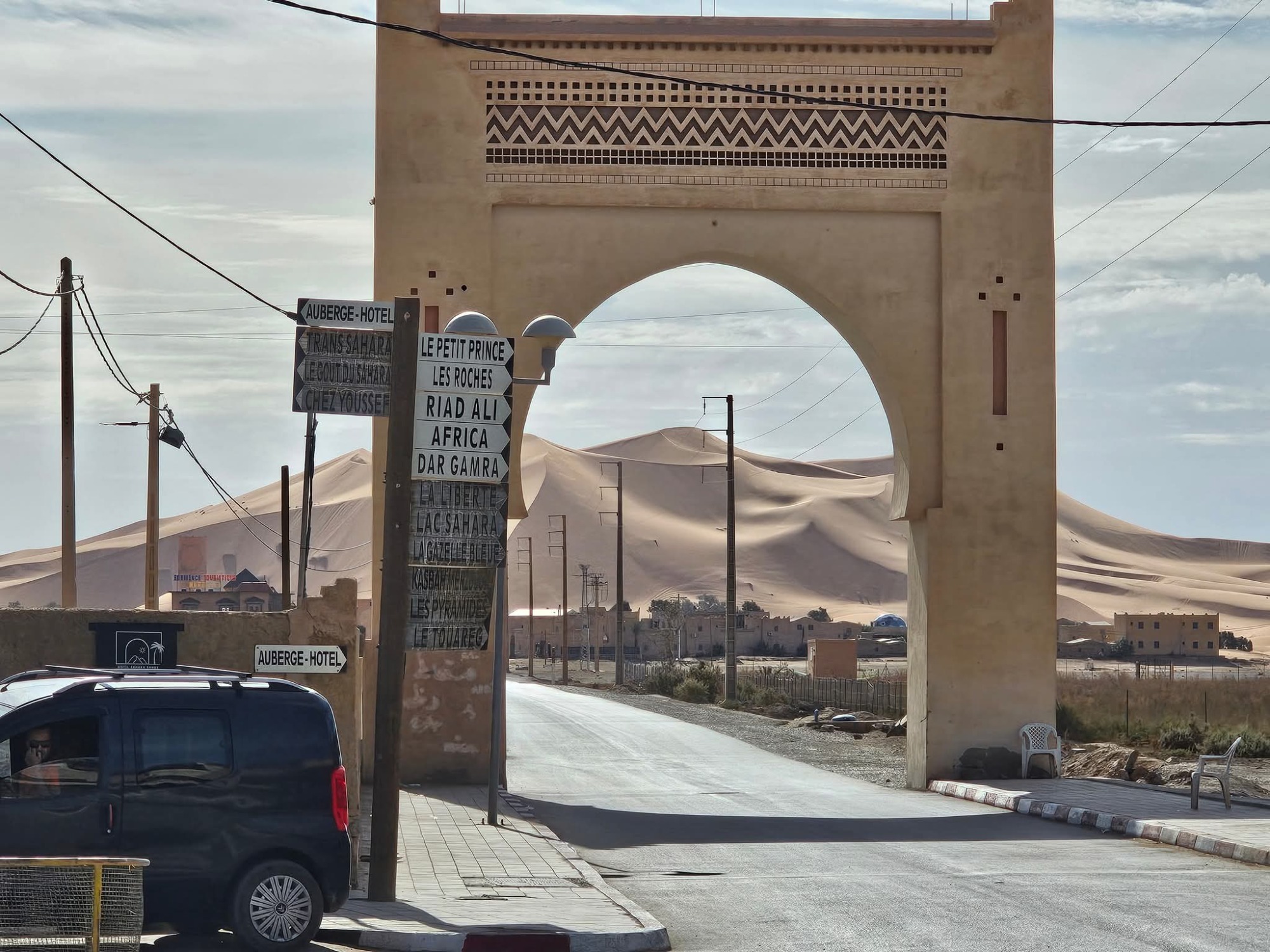
- Snapshot: Doorway to the Sahara; caravan culture and the route toward Erg Chigaga; starry desert nights.
- Suggested stay: 2 days.
Day1
- Drive via Zagora; stop in Tamegroute for green pottery and historic manuscript library.
- Switch to 4x4 to reach the dunes; arrive at desert camp.
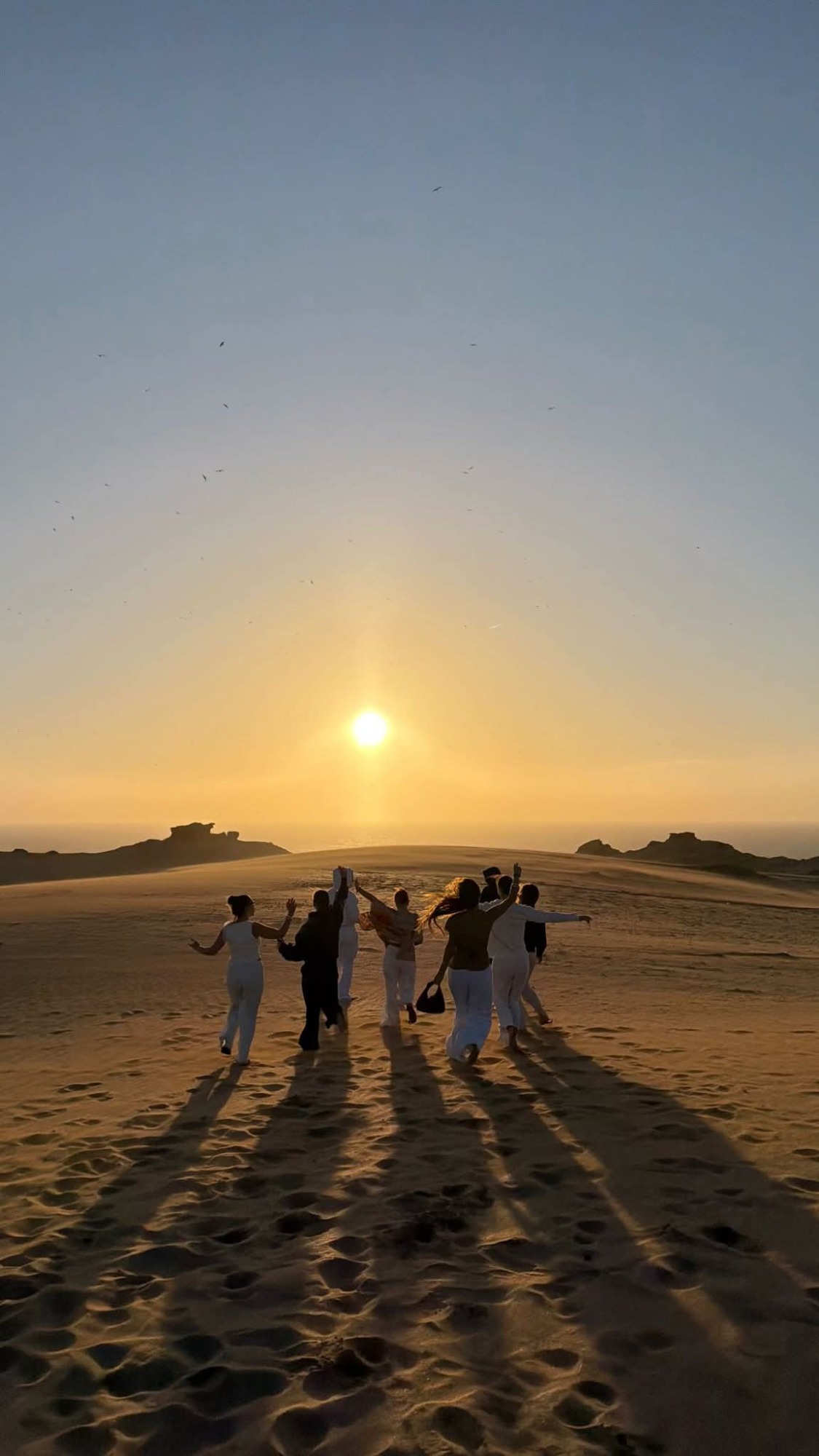
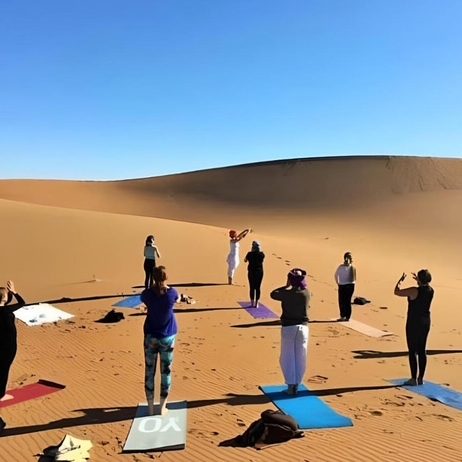
- Sunset yoga on the sands; Saharan drums and story-sharing under a sky full of stars (more than your phone notifications, promise!).
- Traditional Bedouin dinner in the tent.
Day2
- Gentle sunrise yoga practice.
- “Sand bread” workshop and Saharan tea ritual.
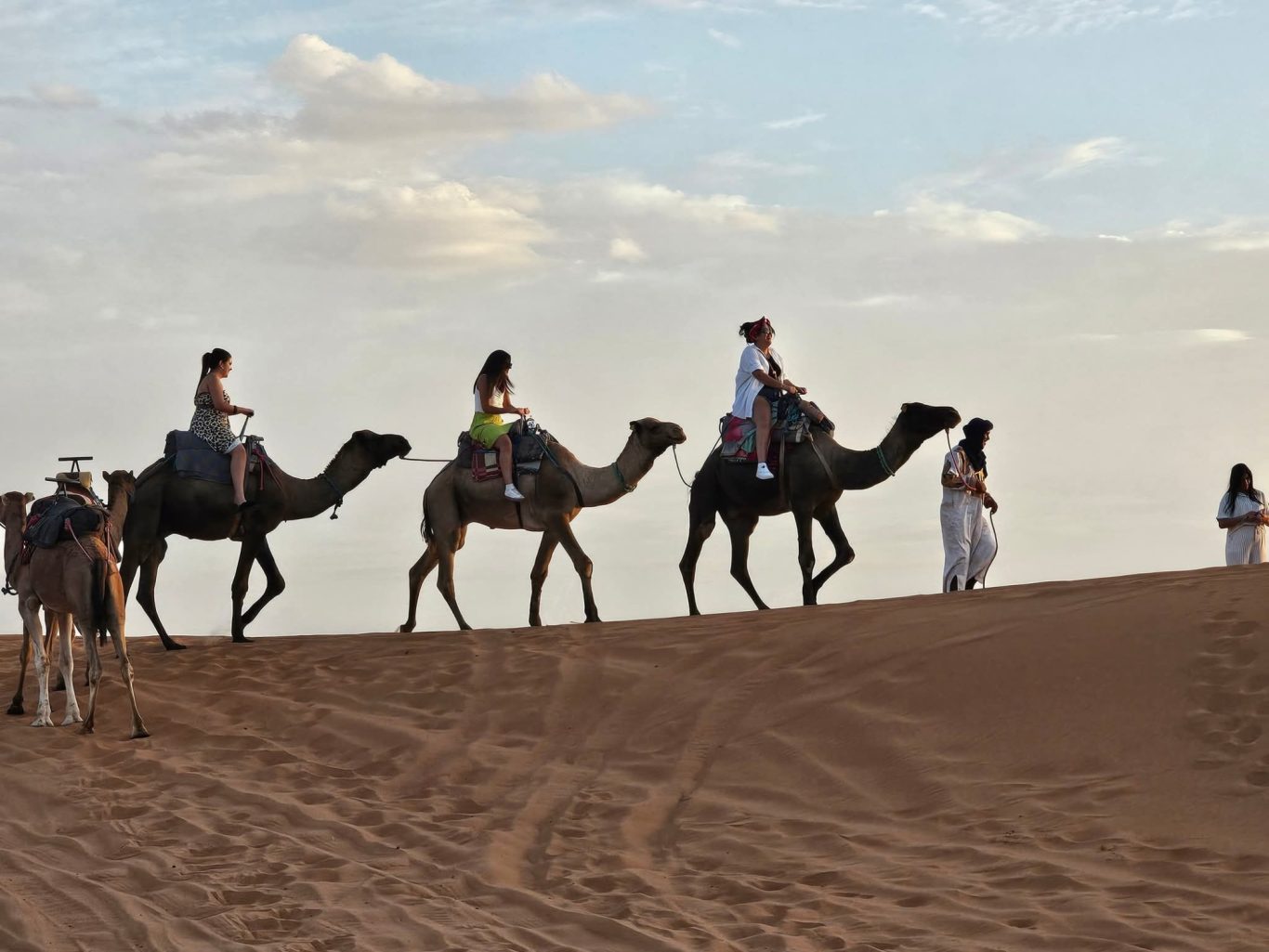
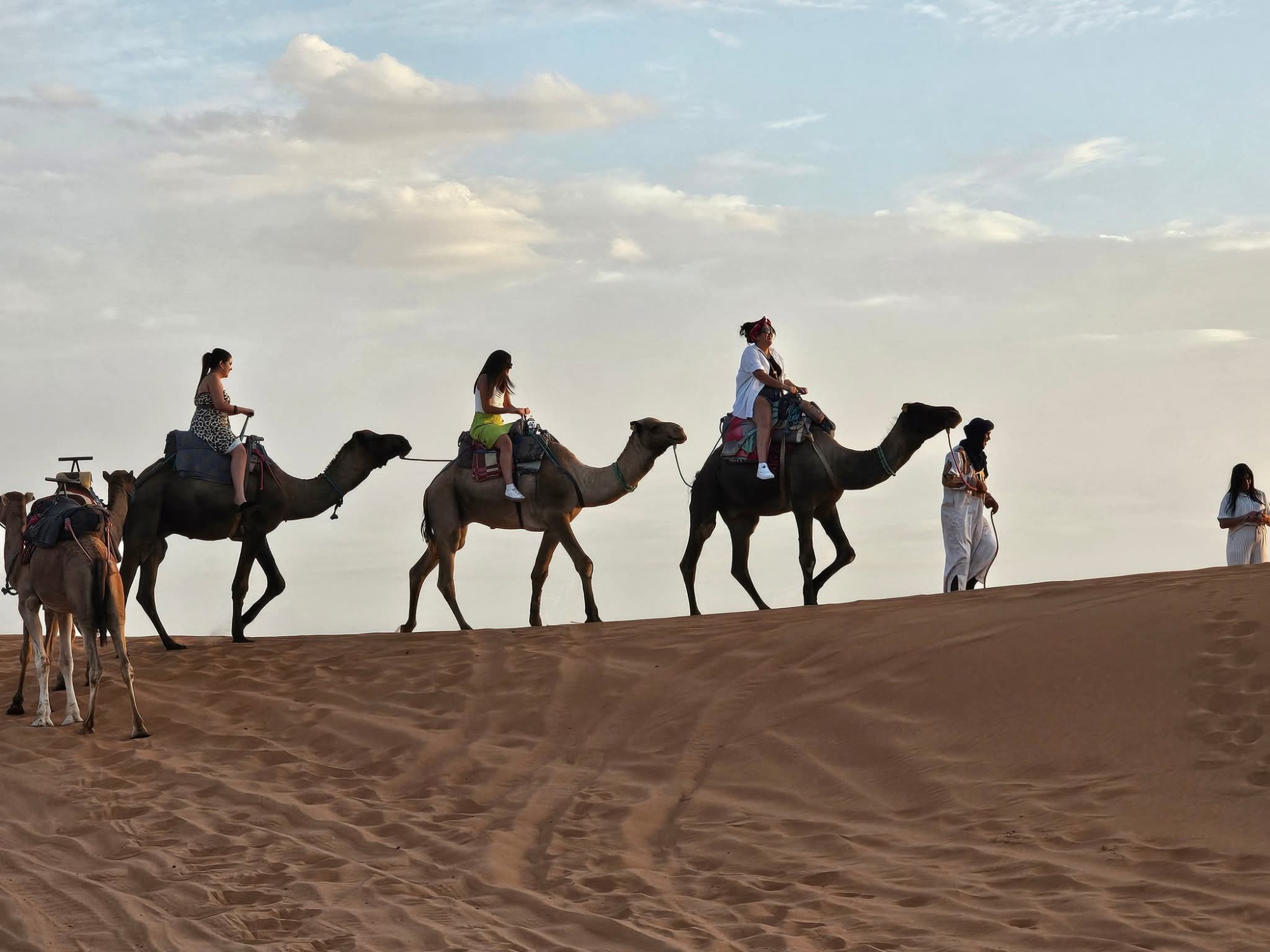
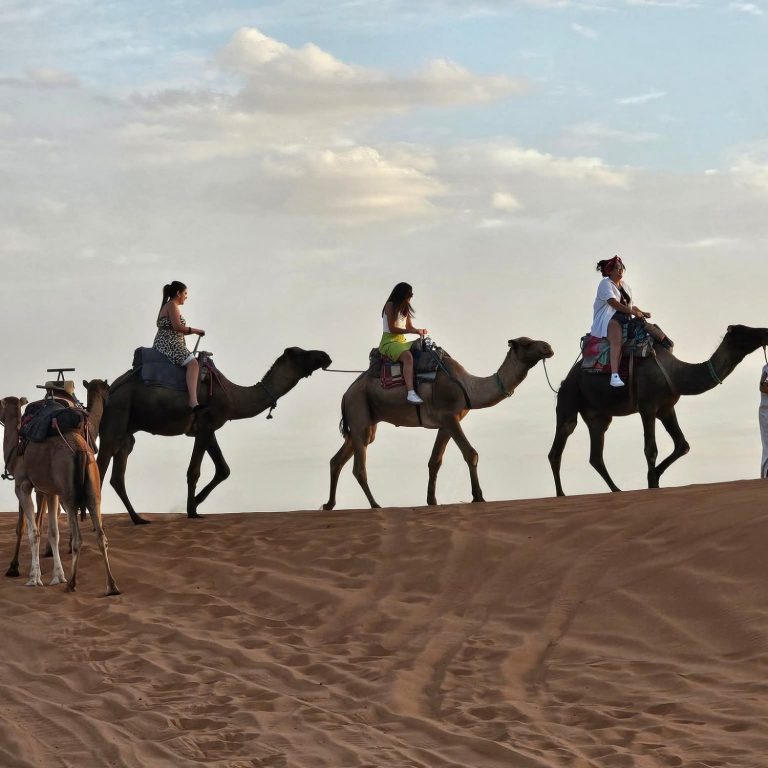
- Camel ride or short dune hike; henna art workshop.
- Night meditation and stargazing; talk with a local guide about nomad life.
Extra
- Deeper journey into Erg Chigaga, visit a nomad family, soft 4x4 dune adventure for thrill-seekers.
Next transfer to Merzouga via Draa/Tazarine/Alnif: 7–8 hours with fossil stops.
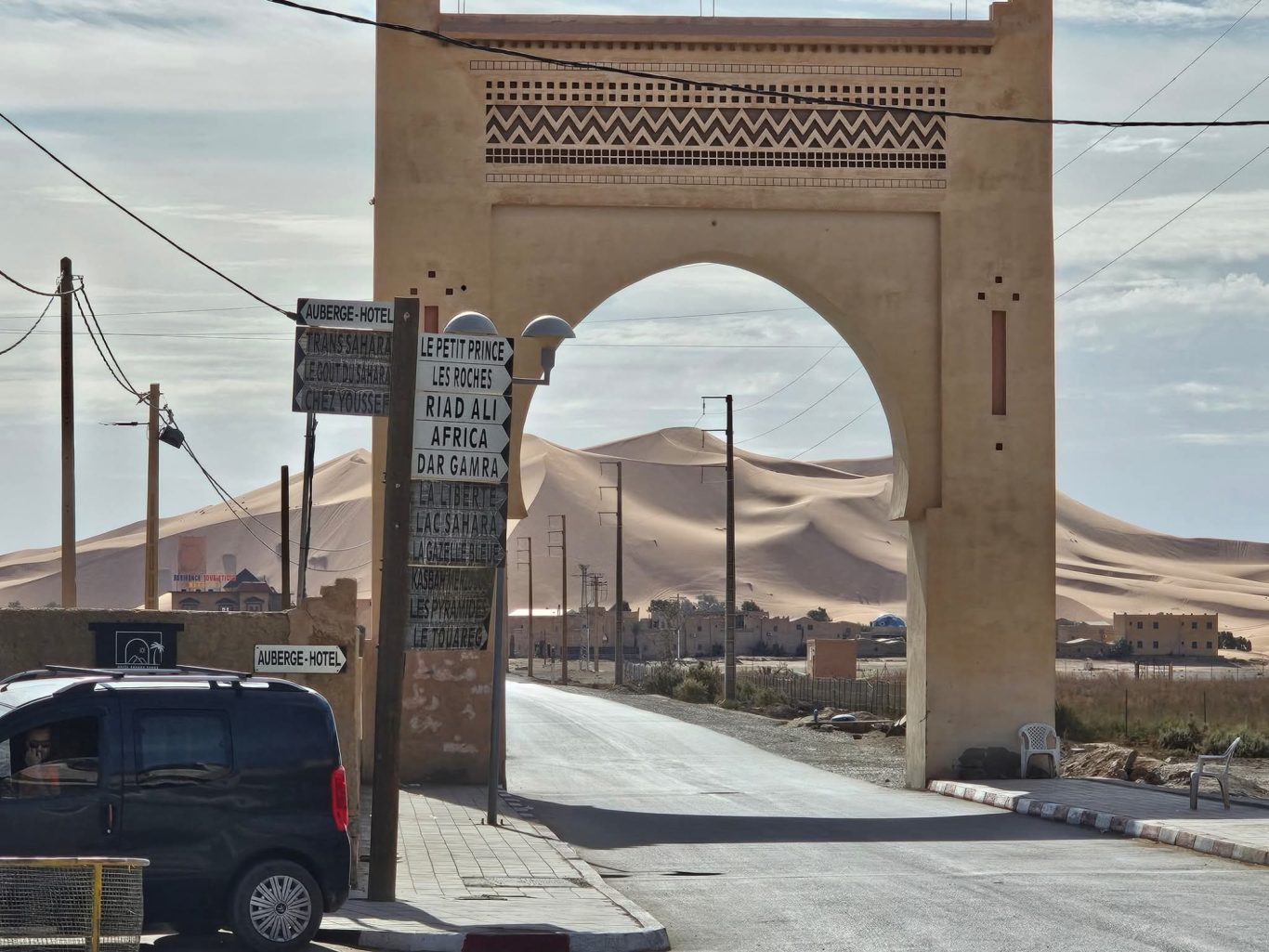
Merzouga
- Snapshot: Home to Erg Chebbi’s golden dunes, Gnawa rhythms in Khamlia, and the markets of nearby Rissani.
- Suggested stay: 2 days.
Day1
- Check into a riad or camp near the dunes.
- Visit Khamlia for Gnawa music; try the guembri (hajhuj) yourself.
- Cooking class in Rissani for “Medfouna” (Amazigh stuffed bread) in an earthen oven; visit the weekly market if timing fits.
- Sunset yoga on the sand; dinner beneath the Milky Way.
Day2
- Pre-dawn camel trek for an unforgettable sunrise over Erg Chebbi.
- Traditional breakfast; siesta or argan-oil spa time.
- Optional adventure: quad bikes/soft 4x4, or fossil sites around Alnif/Erfoud with a guide.
- Restorative sunset yoga; closing meditation.
Extras
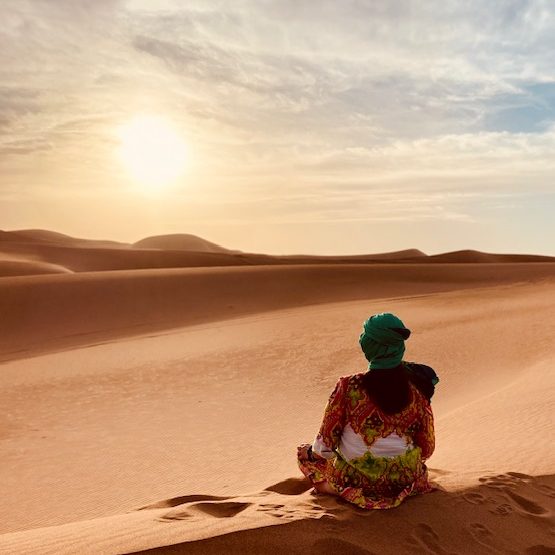
- Simple Moroccan sweets workshop (ghriba, kaab el ghazal), dune photoshoot.
Final transfer Return to Ouarzazate (~6 hours) or head to Errachidia airport depending on your flights.
Magic Morocco Rhythm in Every City
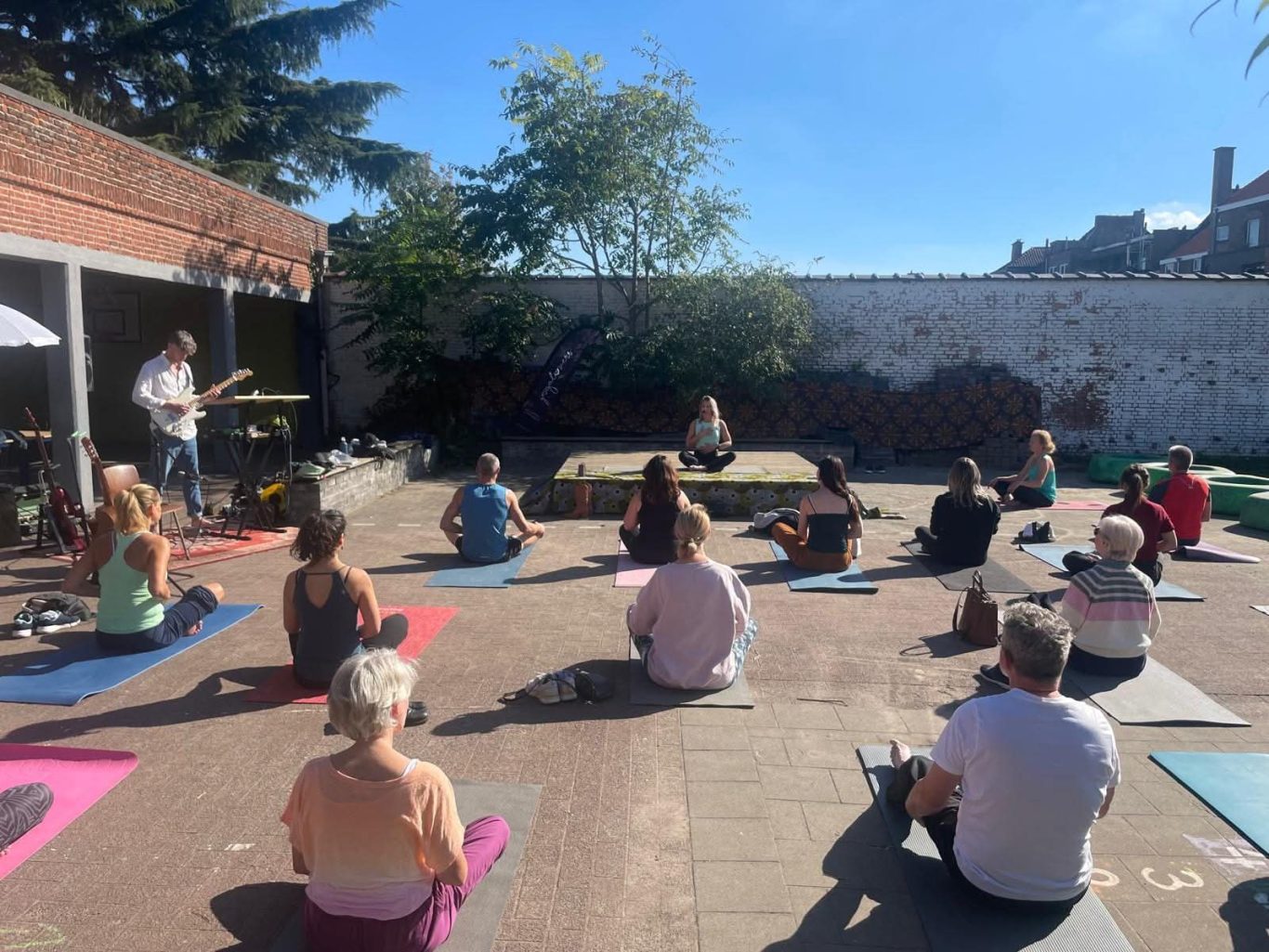
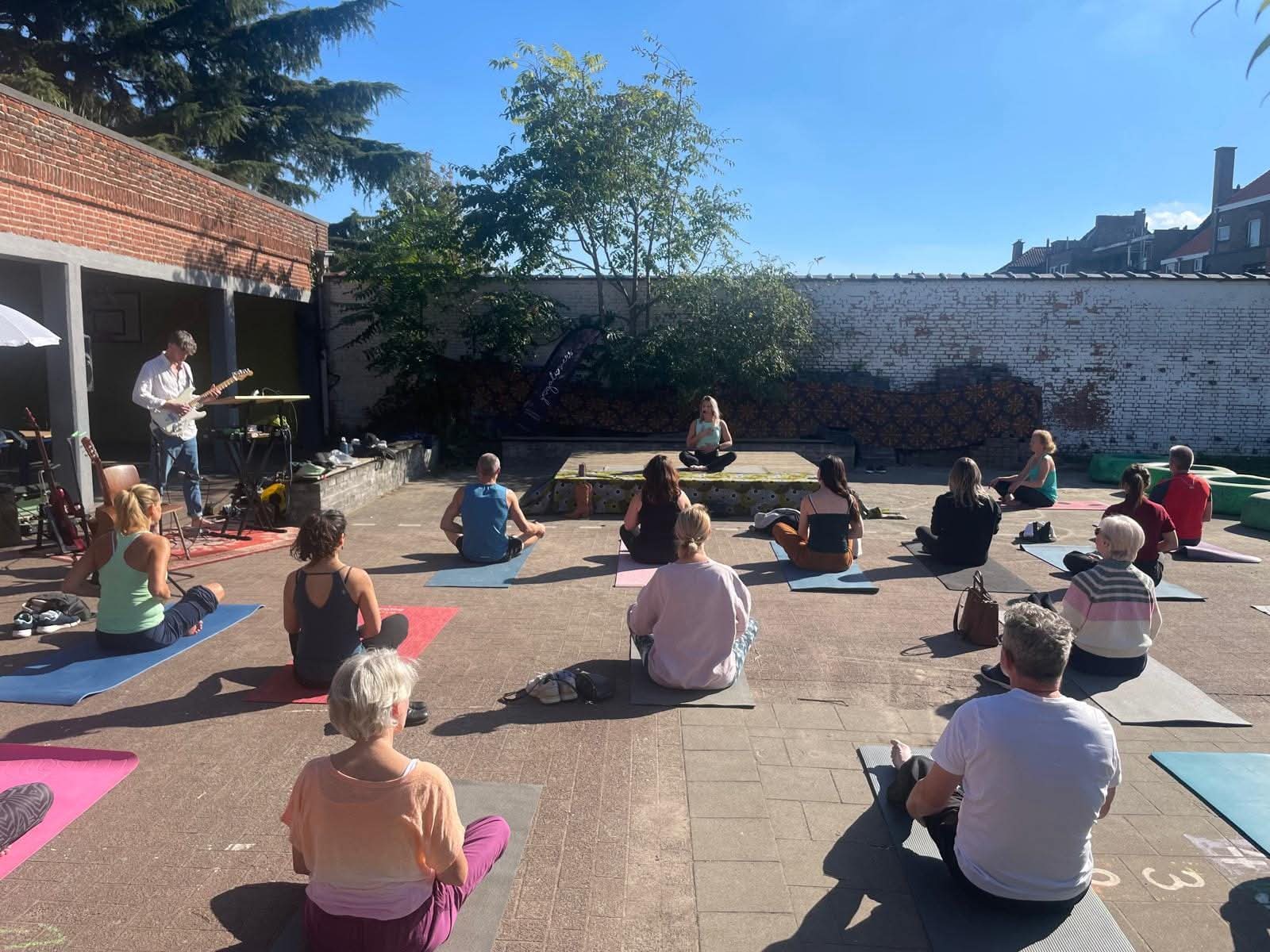
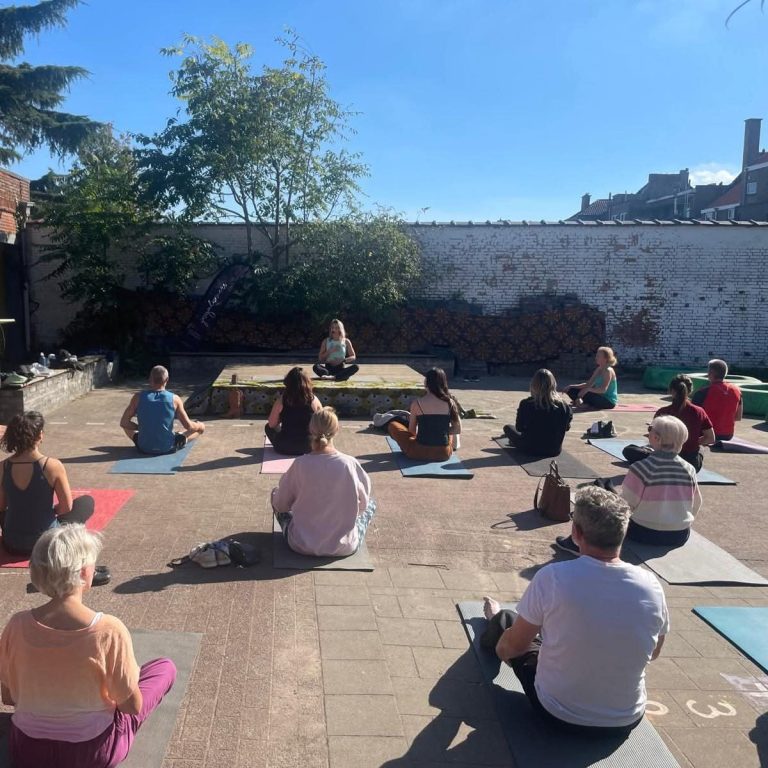
- Yoga & relaxation: typically two sessions daily (Hatha/Yin AM, restorative/meditation PM); mats and blocks provided.
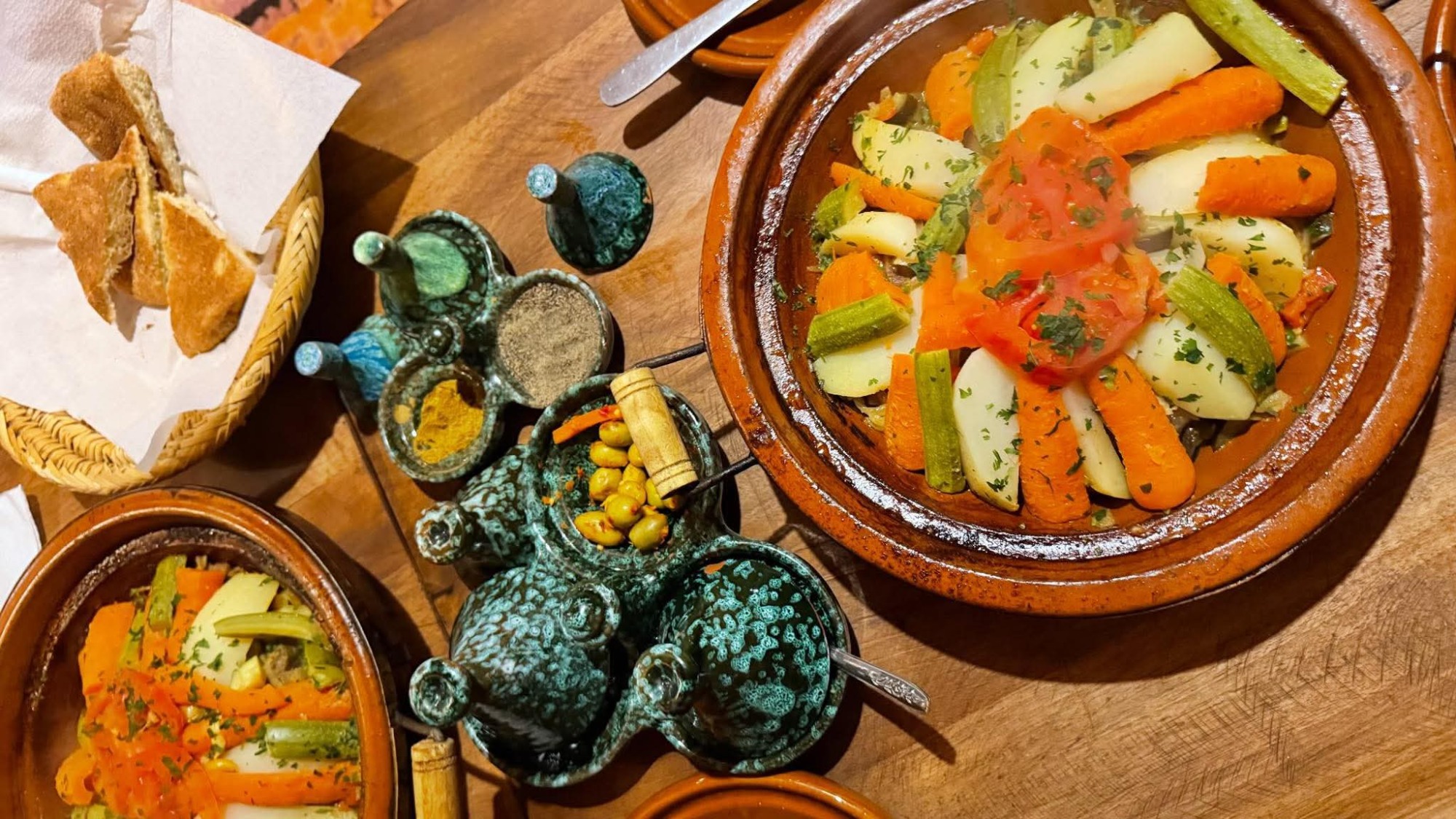
- Cooking classes: fish/chicken/lamb tagines, couscous, harira, pastilla, medfouna, salads, sweets.
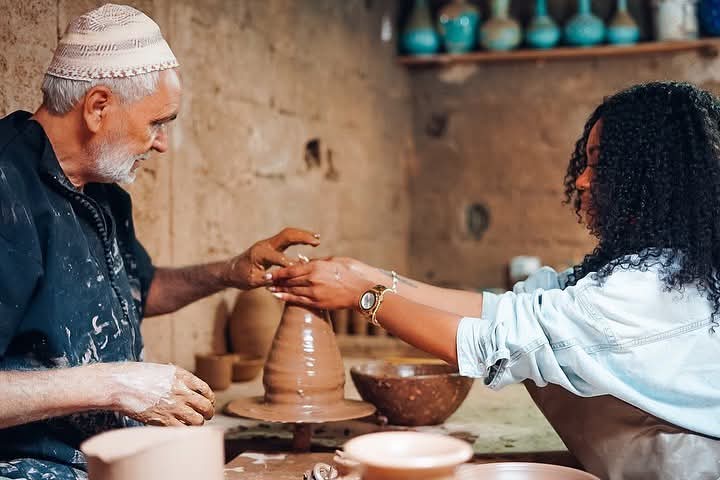
- Crafts: Thuya wood (Essaouira), argan cooperatives, Taznakht rugs, Tamegroute pottery, desert henna.
- Pampering: Moroccan hammam, argan-oil spa, optional massage. Key Distances (approx.)
- Essaouira ↔ Agadir: ~3 hours.
- Agadir → Ouarzazate (via Taroudant/Taliouine/Taznakht): 5–6 hours.
- Ouarzazate → M’Hamid: ~5 hours.
- M’Hamid → Mer
Essential Tips to Plan Your Holiday in Morocco - Magic Morocco Agency
-If your holiday with Magic Morocco involves trips out to the vast expanse of the Sahara Desert, where you may be staying for several days, up to a week, or longer, you will need to be prepared. Here are some useful items that we recommend you pack before you leave on your trip of a lifetime to Morocco.
- A sleeping bag: While we provide plenty of blankets and sheets for your tented desert accommodation, it does get very cold in the Sahara on a winter’s night. Bring along your own sleeping bag, so that you’ll be snug as a bug under the spectacular, if chilly, Moroccan night skies, studded with a galaxy of shimmering stars. This is only really required on trekking over several nights or on the Sufi Retreat.
- A turban or scarf: This is an essential item when heading out on Morocco desert tours, as the simple garment will protect your face and hair from the harsh sun, as well as any sand that gets whipped up by the wind. If you’ve arrived for your holiday in Morocco and find you don’t have a turban — known locally as a “shesh” — or scarf, don’t worry. You can easily buy a “shesh” at a local shop or bazaar.
- Warm clothing: You’ll need to bring some warm clothes when you embark on a Morocco desert tour. Although temperatures are high in the Sahara during the day, they plummet at night, due to a lack of cloud to keep the heat in. While you might think you don’t need to pack heavy clothing for a trip to hot Morocco, you will need it when you’re out in the desert in the evenings in early spring, late autumn, and the winter.
- High-factor sunscreen to combat the strong sun.
- Good quality sunglasses that can filter out the sun’s harmful rays and protect your eyes.
- Solid footwear, such as good trainers, for all the walking you will be doing. Trainers are ideal footwear, whilst walking barefoot in the dunes can also be practical.
- Plenty of bottles of water for the car, but we provide enough bottled water for each person in the desert.
- You might also like to pack a torch and a Swiss army knife, and above all you should make sure that you bring lots of water with you on every car journey in the Sahara. We will of course provide water at the camps you’ll be staying at.
- Being well prepared for your Morocco desert tour will ensure that you have the time of your life on your desert magic tour.
In Morocco, as travellers, we are paying guests, exploring and learning about age-old traditions and fascinated by a world so different from our own. Customs and traditions based either on religion or habits passed down from generation to generation can seem strange, unusual, or odd. Listening, learning and observing, without necessarily understanding and without passing judgment, can enhance our pleasure of participating in this other existence.
As we move around and through this environment, we leave behind impressions of ourselves and our own world – we are the most important ambassadors. Let us ensure that the memories we leave are ones of warmth, generosity, openness, curiosity, modesty and respect for this different society and for the environment which others experience on a daily basis. Moroccans are very welcoming and hospitable people and it behoves us to keep faith with this.
Environmental aspects
The desert is very much alive – witness the myriads of animal tracks on your morning climb to watch the sunrise. It is also other people’s living space. With this in mind, and considering also that the dryness of the desert means that even a paper tissue rots only exceedingly slowly, please be careful to remove all litter.
Throughout Morocco it is important that we are conscious and careful of our water consumption. This is a country under constant threat of drought. We are all individually responsible for maintaining a sustainable environment wherever we are.
Of course, there are scorpions and snakes in the desert, but these rarely pose a danger and they avoid the proximity of humans. Only in summer is it advisable to keep an eye out. The reason for the guide along with you is for your own safety. Please do not venture beyond sight of the camp alone, as it is easy to lose a sense of orientation in the dunes.